
Study Tips Tailored to Your Learning Style

Ever felt like no matter how long you stare at your notes, nothing sticks? Like you’re working twice as hard for half the results? You’re not alone,and here’s the thing nobody told us in school: how we study matters just as much as what we study.
When I was a student, I used to highlight everything. Neon yellow, green, pink,you name it. I thought I was learning. Turns out, I was just coloring. It wasn’t until I discovered I was a kinesthetic learner that things started making sense. I needed to do things to get them. Not just read them.
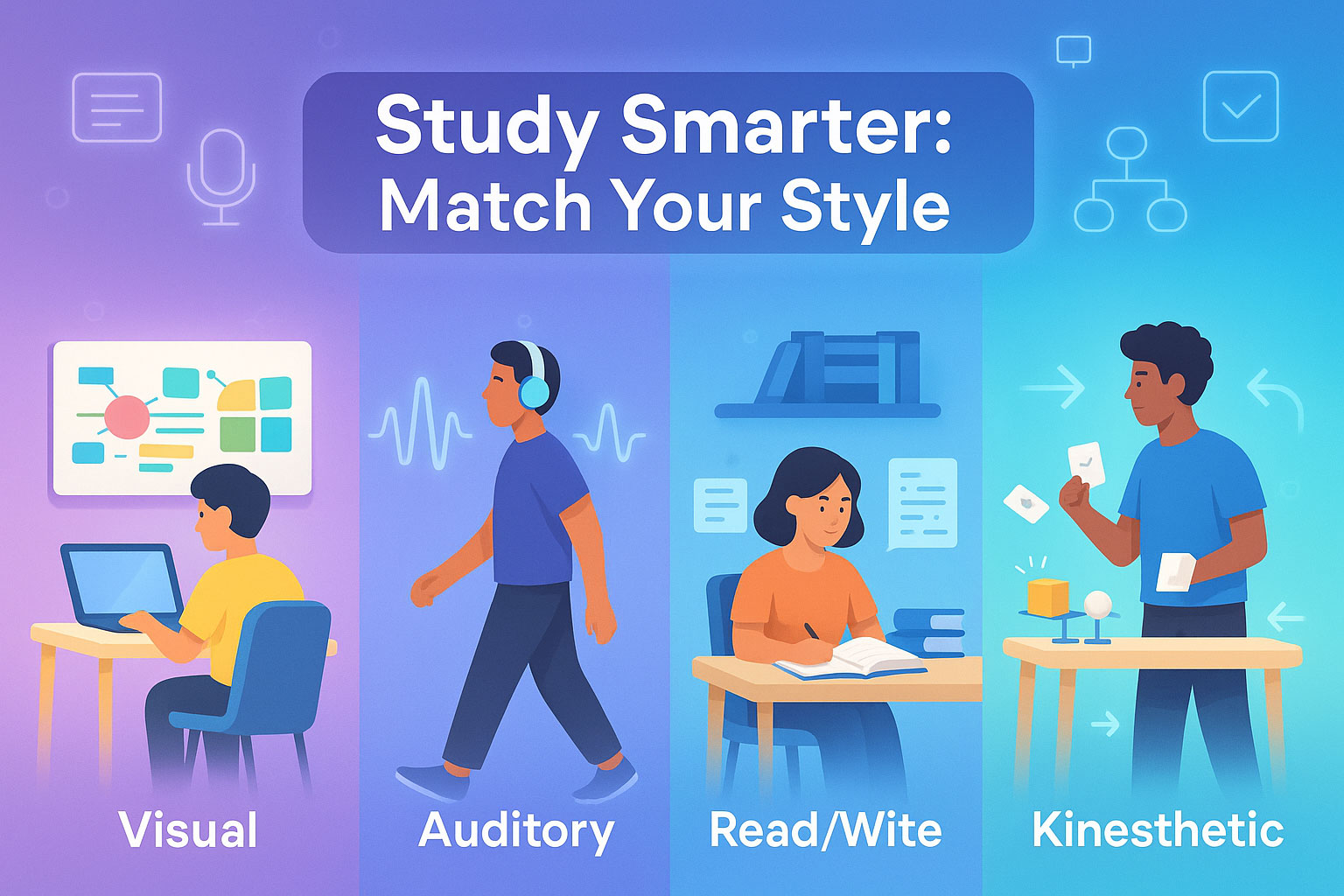
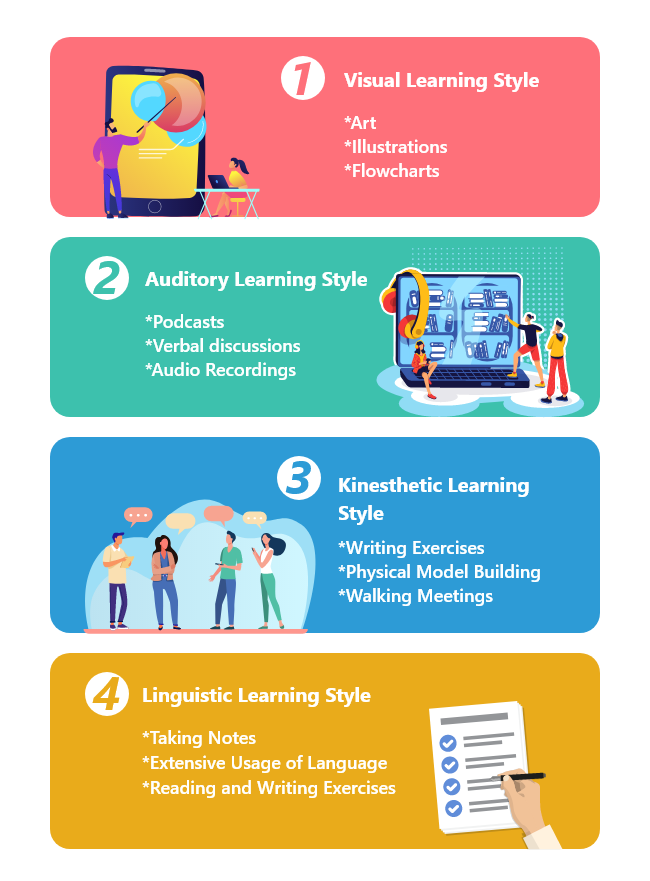
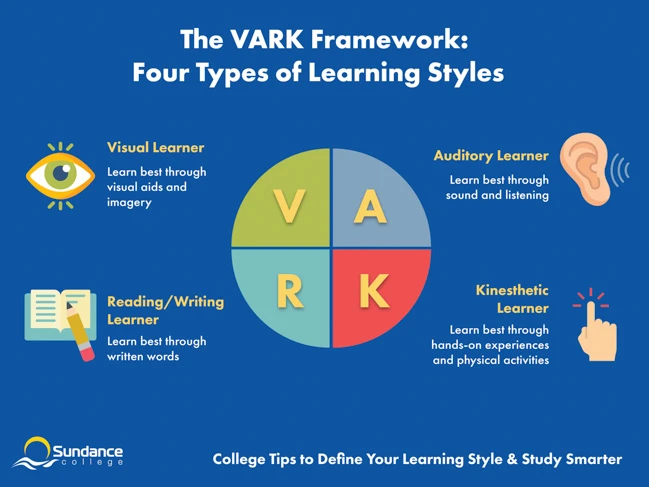
Everyone processes information differently, and the VARK model breaks this down beautifully: Visual, Auditory, Reading/Writing, and Kinesthetic. There are also Social, Solitary, and Analytical styles that matter just as much in real-life learning. Matching your study strategy to your style isn’t just smart,it makes studying feel way less like pulling teeth.
- What learning styles are and how to spot yours
- Tailored study strategies for VARK and beyond
- Practical tools to boost your retention
- Tips for blending multiple learning styles
- How to build a space that fits your study brain
This isn’t another “study harder” article. This is about studying better,your way.
Understanding Learning Styles
What Learning Styles Are (And Why You’ve Probably Been Ignoring Yours)
Learning styles are basically the way your brain prefers to take in and work with new information. The most common breakdown? That’s VARK: Visual, Auditory, Reading/Writing, and Kinesthetic. Each of these styles leans into a different sensory pathway,what we see, hear, read/write, or physically do.
Why does it matter? Because when your study method doesn’t align with your brain’s favorite input channel, it’s like trying to download a movie with dial-up. It’ll take forever,and the file might still corrupt.
Why Knowing Your Style Matters
Here’s a truth bomb: nobody is 100% one style. Most of us blend two or more. But knowing your dominant one gives you a head start. It’s not about putting yourself in a box,it’s about unlocking how you learn naturally.
Matching methods to style can boost retention by up to 400% according to research cited by Neil Fleming, creator of the VARK model. That’s wild. I mean, imagine remembering what you studied without having to cram the night before? For example, some strategies pair naturally with learning style‑based study tips to help tailor your approach for better outcomes.
Breaking Down the VARK Model
Below, you’ll meet each VARK type,with real strategies, not fluffy tips. I’ll also throw in my own learning confessions so you can see how this plays out in real life.
The VARK Model Explained
Visual Learners
Visual learners process info best through charts, diagrams, and color-coded notes. If you’ve ever turned a lecture into a mind map or flowchart, you might be one.
I once helped a friend who used sticky note posters with arrows and themes. Her room looked chaotic but she nailed her exams without endlessly rereading. Pair this with structured note-taking techniques and your visuals will stick even longer.
Auditory Learners
If hearing something locks it into your brain, you’re probably an auditory learner. You might benefit from lectures, podcasts, or explaining things out loud. Recording yourself reading notes? Game-changer.
In college, I’d walk laps around the block listening to my lecture recordings. My neighbors probably thought I was nuts, muttering “photosynthesis” over and over again. But that repetition through sound? Gold.
Reading/Writing Learners
This is the old-school learner. Give them a dense PDF and a highlighter, and they’re set. These learners love reading, summarizing, and rewriting notes.
My trick? I’d rewrite all my notes by hand,in my own words. Not typing. Writing. That physical act cemented the knowledge like nothing else.
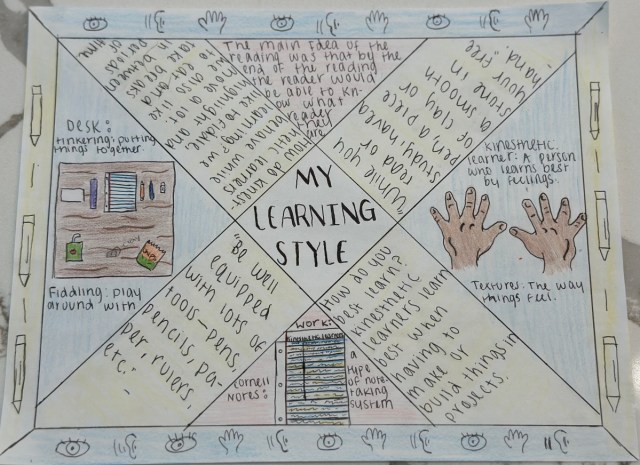
Kinesthetic Learners
Hands-on is their jam. They learn by doing,building, moving, acting things out. Sitting still with a textbook? That’s their personal hell.
I worked with a student once who literally studied while pacing. He’d bounce a tennis ball off the wall and quiz himself. And guess what? He remembered everything. Motion wasn’t a distraction,it was his secret weapon.
Tailored Study Strategies by Style
| Learning Style | Best Study Techniques | Tools That Help |
|---|---|---|
| Visual | Mind maps, color-coded notes, diagrams | Lucidchart, Canva, sticky notes |
| Auditory | Lectures, discussions, self-recordings | Voice Memos, Podcasts, Group Study |
| Reading/Writing | Note rewriting, outlines, flashcards | Quizlet, Evernote, notebooks |
| Kinesthetic | Hands-on tasks, role-play, walking while reading | Flashcards, models, whiteboards |
Kinesthetic and Practical Approaches
Get Your Body Involved
If you’re kinesthetic, move. Don’t just read,build models, role-play history events, act out vocabulary terms. If it’s science, try the experiment yourself. If it’s math, use actual objects.
Even using your fingers to count or acting out cell mitosis with props helps more than you’d think.
Tools That Let You Touch and Tweak
Flashcards aren’t just for reading/writing folks. Shuffle them. Sort them. Throw them across the floor and pick the right answer. That physical connection boosts your memory like crazy.
Combining Multiple Styles
The Multimodal Advantage
Most people aren’t one-style wonders. Maybe you read and write well, but also love group study. That’s called multimodal. And using more than one method? That’s actually better for long-term retention.
I do this all the time. I’ll read a section, talk it out with someone, and then diagram it. Boom,triple reinforcement. You don’t need to pick one style. Use what feels right for the task.
Flexible Study Routines
Mixing styles also helps you adapt. Say you’re a visual learner but stuck with a teacher who only lectures. If you know how to blend auditory tools with visual reinforcements, you’re covered. I’d often listen to the audio, then create a diagram after class. That double hit made all the difference.
How to Identify Your Learning Style
Using Self-Assessments
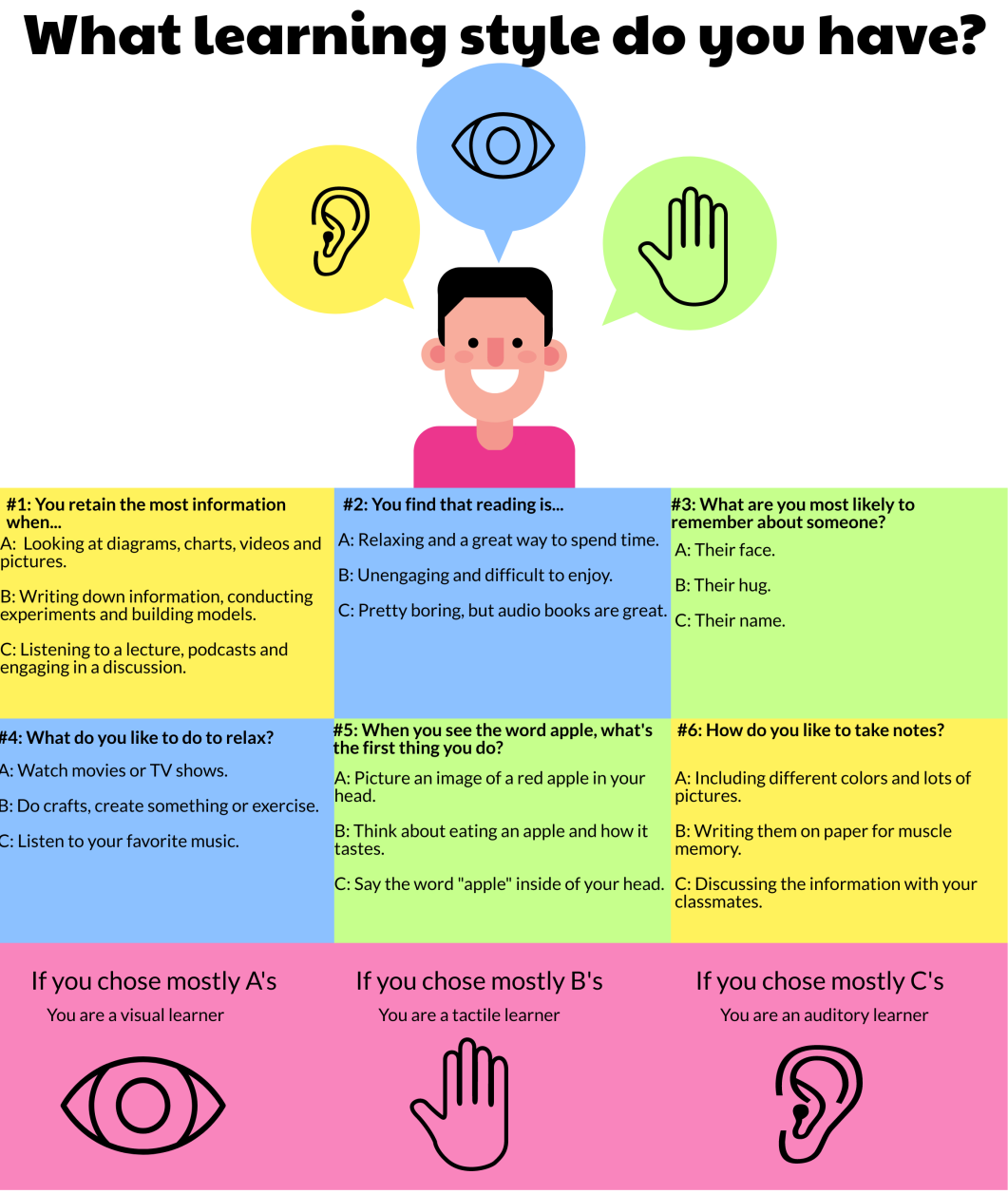
The quickest way to start? Take a legit learning style test. The VARK Questionnaire is free and reliable. It’ll break down how you process info and suggest ways to work with your natural preferences.
When I took it, I wasn’t surprised to see kinesthetic as my top style. But seeing that I also leaned toward auditory made sense of why I loved podcasts so much. It helped me study smarter,not longer.
Watch Your Habits
Do you doodle while listening? Read everything twice? Need to talk through ideas out loud? Those little things you do while learning are clues. Start noticing them. For example, if you naturally sketch concepts, your brain probably prefers images.
Apps That Make It Easy
There are great tools that go beyond quizzes. Apps like MyLearningStyle, LearnCoach, and Brainscape let you experiment with mixed methods and track what works. It’s not about boxing yourself into one category,it’s about finding what sticks for you.
Study Environment & Routine Optimization
Match Your Space to Your Brain
This one’s underrated. If you’re visual, clutter might overwhelm you. Try an organized desk with a whiteboard nearby. For auditory folks? Noise-canceling headphones or classical music in the background can make all the difference.
As a kinesthetic learner, I can’t sit still. I’ve learned to pace with flashcards or stand at a tall desk. Movement helps me focus,sounds weird, but it works. You’ve gotta honor your style even in your surroundings.
Time Your Study by Type
Kinesthetic learners burn out faster sitting still, so shorter bursts work best. Auditory and visual folks can go longer with passive listening or image reviews. I use the Pomodoro method: 25 minutes of study, 5 minutes of movement. Works like a charm.
Make Peace with Weak Spots
None of us are strong in every mode. But here’s a trick,use your strong style to reinforce your weak one. I’m terrible with rote memorization. But if I physically act out a concept, I remember it. Know your weak spots, then use your strengths to bridge the gap.
FAQs
What if I don’t fit into one learning style?
Most people don’t. That’s normal. We all blend styles. The key is figuring out your dominant preferences, then mixing others based on the subject or task. Flexibility = power.
Are learning styles scientifically proven?
The science is still debated. Some studies support them, some say they’re oversimplified. But one thing’s clear: studying in ways that feel natural improves motivation and retention. That alone makes it worth exploring.
Can I improve other learning modes?
Absolutely. Just like muscles, the more you train a weak style, the stronger it gets. Start small. Visual learners can practice reading aloud. Auditory folks can doodle diagrams. Play with it.
What’s the best style for memorization?
Depends. Kinesthetic learners remember by doing. Visual learners might sketch mind maps. Auditory folks use rhymes. Try combining methods for better recall,like speaking while writing or drawing as you listen.
Recap of Key Points
Learning styles aren’t hype,they’re a lens. VARK and beyond give you tools to tune into your brain’s rhythm. Whether you’re visual, kinesthetic, or somewhere in between, matching strategy to style works.
We talked about:
- What learning styles are and why they matter
- Study strategies for visual, auditory, reading/writing, and kinesthetic learners
- Ways to identify your learning style through behavior and tools
- How to create a space and schedule that works for you
- What to do when you’re multimodal or want to build weaker styles
Learning doesn’t have to be a struggle. When you work with your brain,not against it,you learn faster, retain more, and honestly, enjoy the process. You’ve got this.