
Productivity Techniques for Students: Focus Better, Study Smarter

Sometimes, studying feels like pushing a boulder uphill in flip-flops. I’ve been there blank screen, buzzing phone, one tab for notes and twenty open for… distractions. I didn’t fail because I wasn’t smart. I failed because I didn’t know how to study productively.
Procrastination was my biggest enemy. I’d tell myself I had time, then binge episodes of something forgettable. And even when I did get down to it, I was scattered, flipping between tasks like I was on some kind of mental trampoline.
It wasn’t until I stumbled on a few no-fluff systems that things finally clicked: ways to organize, focus, and manage my time that didn’t feel overwhelming or robotic.
- Why productivity isn’t about doing more it’s about doing less smarter
- The 3 techniques that saved my grades (and my sanity)
- How multitasking destroys your brain’s rhythm
- The digital tools I swear by now
There’s no “perfect” student. But there is a better way to study and it starts here.
What Makes Productivity Important for Students?
If you’re juggling lectures, deadlines, group projects, part-time work, and maybe even a social life welcome to studenthood. But let’s talk straight: most of us were never taught how to be productive. We just get handed a syllabus and hope for the best.
The Cost of Procrastination
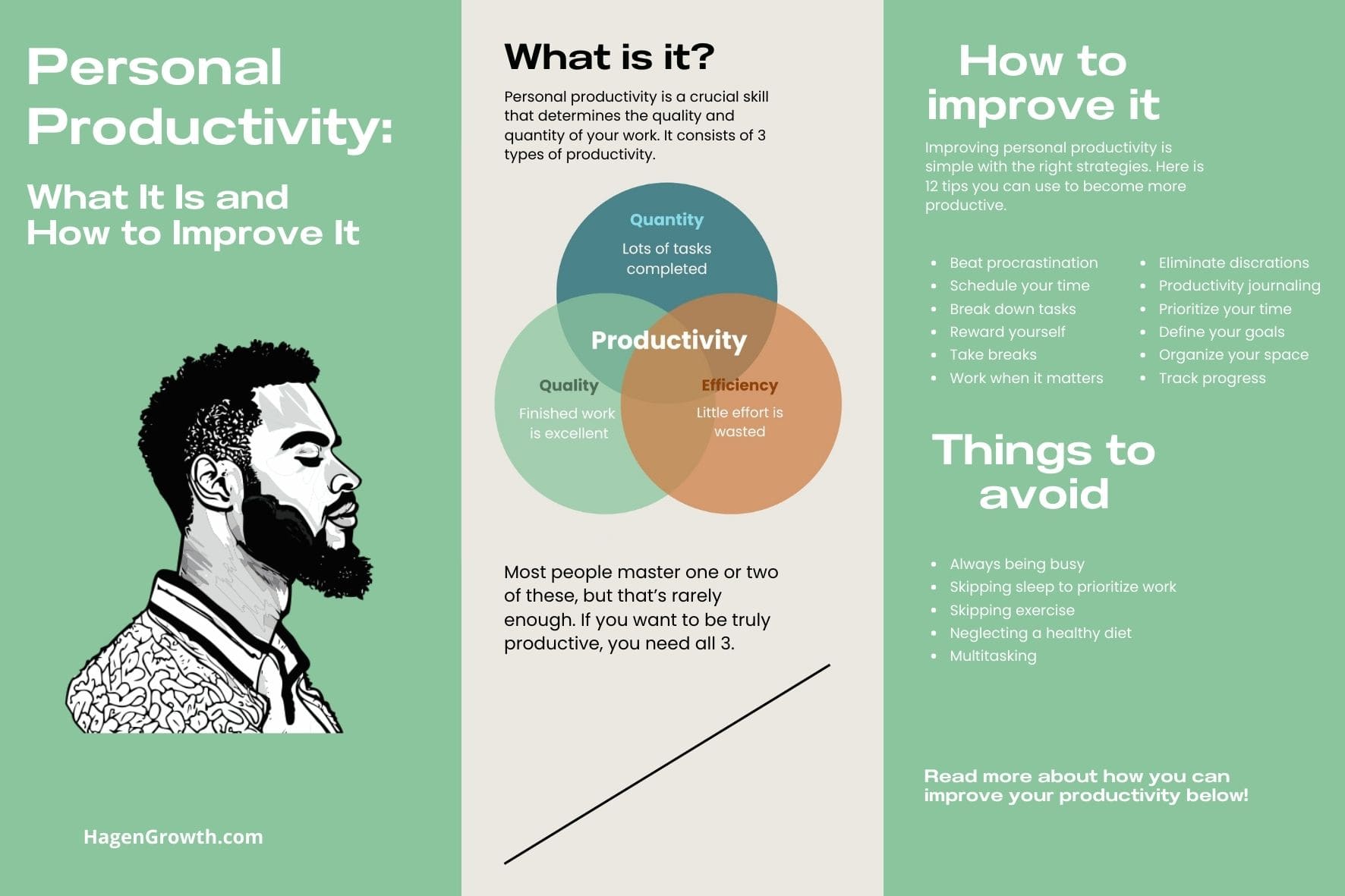
I used to think waiting until the last minute made me more focused. Truth? It just made me anxious. Procrastination isn’t lazy it’s often fear, perfectionism, or just plain overload. And the toll is real: sleep deprivation, poor performance, and that nagging guilt that clings like static.
Research shows that procrastinating students tend to score lower and feel more stressed. It’s a double-whammy that quietly eats at your confidence.
The Science of Focus
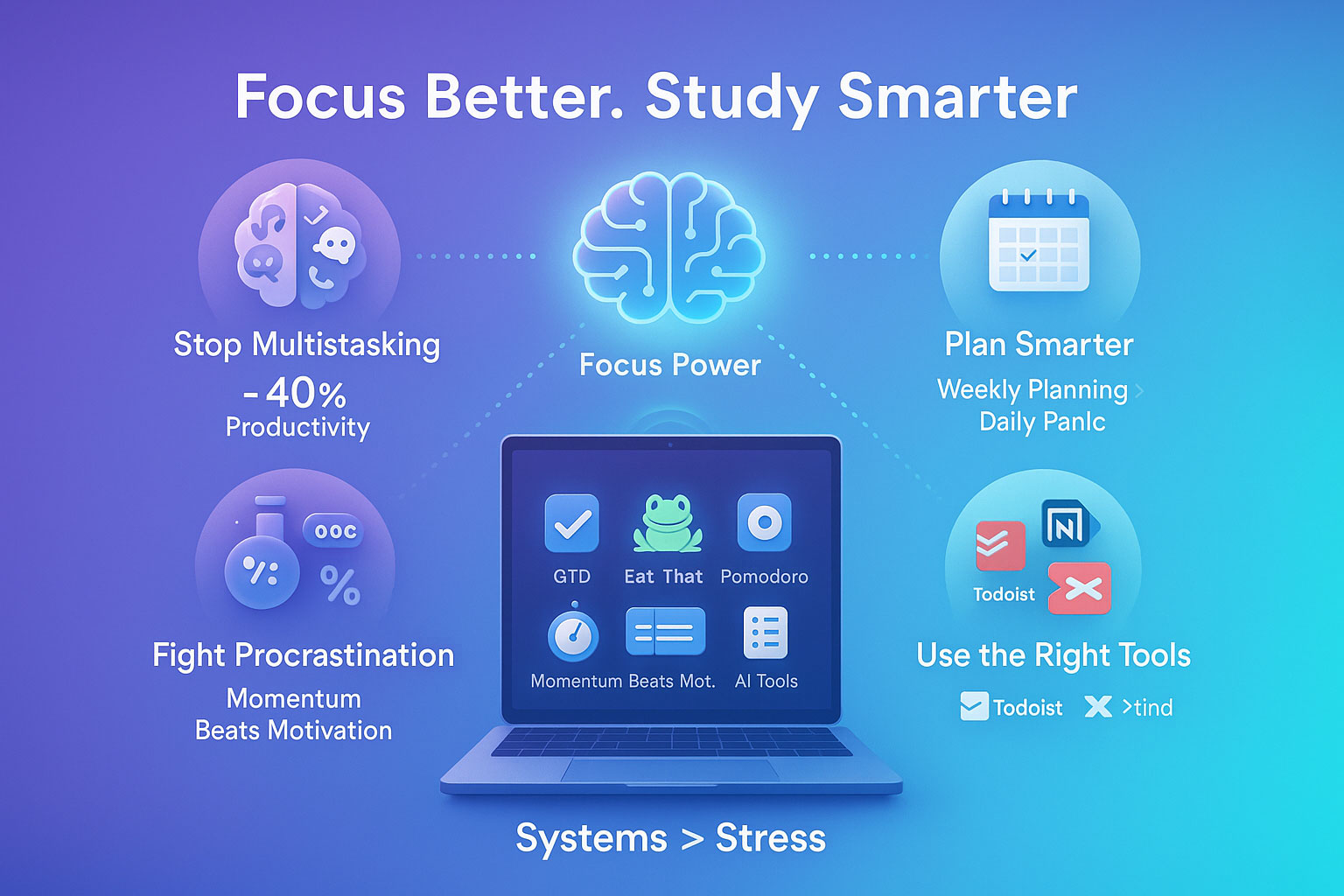
Multitasking used to sound like a flex. But the truth is, it can drop your productivity by up to 40%. Your brain isn’t wired for task-switching it’s wired for rhythm. Every ping, tab switch, or half-listened-to podcast creates friction. Focus is a muscle. And the less you use it, the weaker it gets.
Core Productivity Techniques to Implement Now
These aren’t gimmicks. These are the ones I’ve used myself and I’d bet my library card they’ll help you too.
Getting Things Done (GTD) for Academic Tasks
This one changed my whole workflow. GTD, made by David Allen, breaks life into steps: Capture → Clarify → Organize → Reflect → Engage. I started by brain-dumping everything from “revise chem notes” to “email group project lead.” Just getting it out of my head was a relief. Then I clarified each one. What’s the actual action? What can be done today vs. later?
I now use Todoist and Google Calendar to keep track of my action items and due dates. The best part? You stop stressing because you trust your system.
Eat That Frog: Tackle the Toughest Tasks First
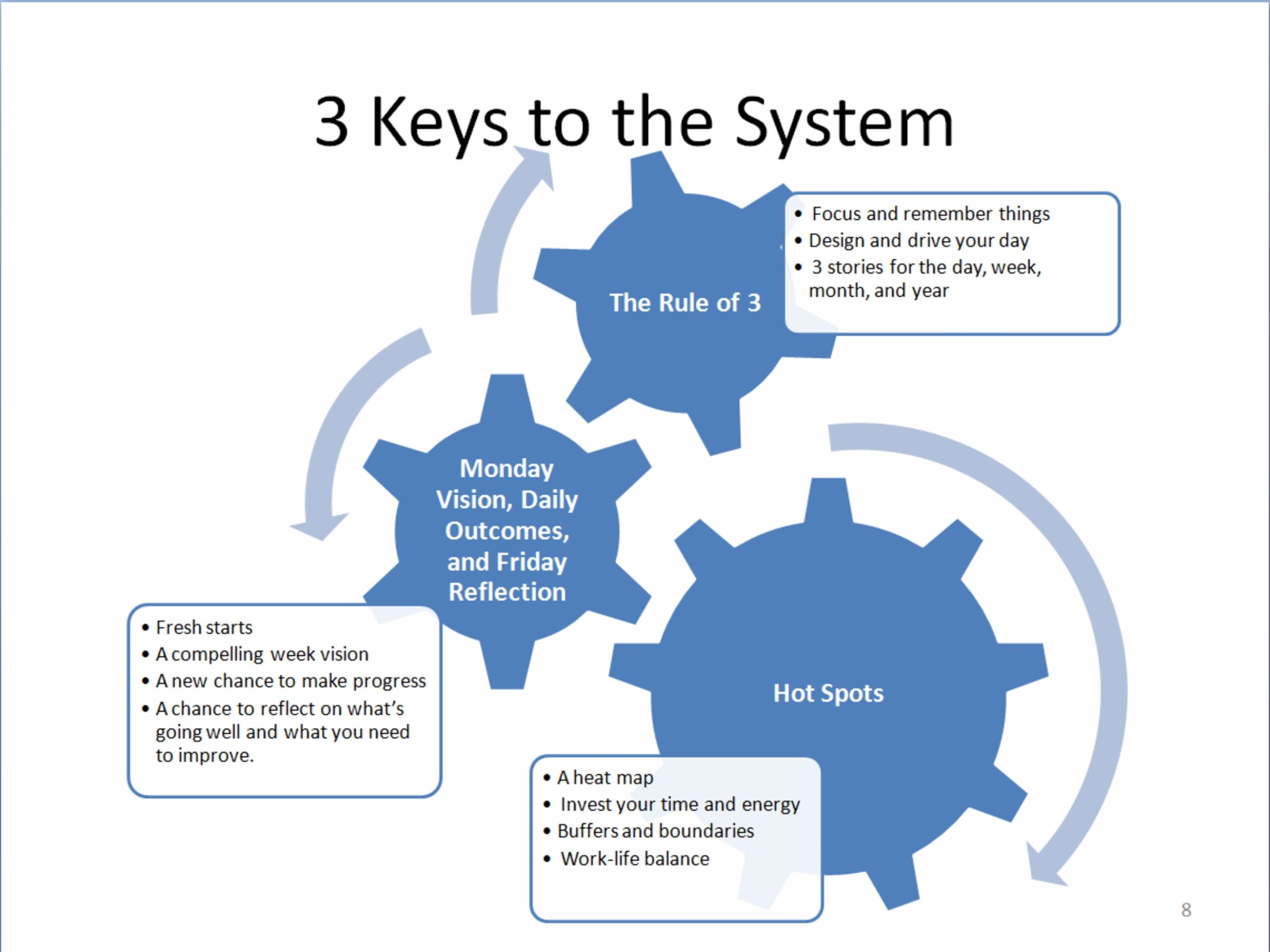
Ever heard “if you eat a frog first thing in the morning, the rest of the day gets easier”? That’s this idea. Your “frog” is that one task you’re dreading. I started using this when I kept putting off statistics homework. So now? I do it first thing, before checking messages or anything else. It’s hard, but the payoff is real. You get momentum. Your brain rewards you with a hit of dopamine, and suddenly the rest of the day feels doable.
The Two-Minute Rule
If it takes under two minutes, just do it. That email reply. That file rename. That paper staple. I used to write these things down and then waste more time trying to remember them. The two-minute rule kills mental clutter before it becomes a storm. It’s deceptively simple and shockingly effective.
Time Management Strategies That Work
Managing your time isn’t just about squeezing more in. It’s about protecting the right things. I stopped asking, “How can I do everything?” and started asking, “What’s worth doing well?”
Create a Daily or Weekly Study Plan
There’s something magical about writing stuff down. Every Sunday, I spend 10 minutes planning out my week. I block out classes, assignments, workouts, even my naps. I color-code categories in Google Calendar (assignments in red, lectures in blue, breaks in green). This way, I can see my week at a glance and know when I can chill guilt-free.
My workflow pairs perfectly with strategies from Productivity Techniques for Students organizing tasks, focusing effectively, and eliminating mental clutter.
| Tool | Best Use | Why I Like It |
|---|---|---|
| Todoist | Task Tracking | Simple, intuitive, syncs across devices |
| Notion | Project Planning | All-in-one workspace, very customizable |
| XMind | Mind Mapping | Great for exam prep and brainstorming |
Block Out Distractions and Multitasking Myths
You’re not being efficient if you’re toggling tabs and checking TikTok every 7 minutes. That’s just mental noise. When I stopped multitasking and started mono-tasking, I worked less but got more done. Try setting 25-minute focused sessions with 5-minute breaks. It’s called the Pomodoro Technique. And it works. No hacks. Just rhythm.
Study in Your Peak Hours
I’m useless before 9 a.m. My friend Lisa? She crushes calculus at 6:30 a.m. We’re just wired differently. Pay attention to your energy patterns. Track when you feel alert, distracted, tired. Then match your heavy mental work (like math) to your sharpest hours, and your lighter work (like reviewing flashcards) to slower times.
This little adjustment made my evenings so much less stressful because I stopped fighting my brain’s natural flow.
Staying Motivated and Focused Over Time
Let’s be honest motivation doesn’t just magically appear every morning. I used to wait for it. Now, I build systems that don’t depend on it. When I stopped relying on feeling motivated and started relying on momentum, everything got easier.
Use Rewards to Reinforce Habits
One of the biggest mindset shifts I had? Making studying feel less like punishment. After every focused session, I give myself a little treat watching a funny YouTube video, grabbing a snack I love, or just scrolling guilt-free. That positive feedback loop makes me want to study more because my brain links effort with satisfaction.
Refresh with Intentional Breaks
I used to feel bad taking breaks. Like I was being lazy. But then I realized, breaks aren’t just allowed they’re necessary. I now take a 10-minute breather every hour. Stretching, walking around, sometimes just closing my eyes. These pauses help my brain reset. I come back sharper, less irritated, and ready to go again.
Change Study Environments for Fresh Focus
There’s something magical about switching up your space. When I’m feeling stuck, I’ll take my notes to a coffee shop or a library corner I’ve never sat in. Sometimes I even study outside. That fresh backdrop wakes my brain up. It turns a stale routine into a mini adventure.
Tools and Tech to Boost Productivity
If you’re trying to juggle everything using just your memory, you’re setting yourself up for stress. There are so many tools designed to help you study smarter not harder. These are the ones I’ve personally tried and kept coming back to.
Digital Tools to Stay Organized
Todoist helps me sort out everything that’s floating in my head. I organize by subject, set due dates, and even assign priority levels. The checkboxes? So satisfying.
Notion is where I keep my reading logs, assignment calendars, and even lecture summaries. I love how visual and customizable it is it feels like my brain’s command center.
XMind helps me map big topics, especially when I’m prepping for exams. Seeing concepts laid out visually just clicks better for me than reading paragraphs.
Use Mind Maps and Visual Aids
I’m a visual learner, so seeing my topics spread out like a tree with branches helped me notice connections I never saw before. I’ll make a main node say, “Photosynthesis” and then branch out into components like light reactions, enzymes, and key formulas. XMind makes this super easy to do, and honestly? It’s kinda fun.
FAQ
What is the best productivity method for students?
There’s no one-size-fits-all. But based on my own experience and what’s backed by research, GTD (Getting Things Done) and time-blocking are power combos. Start small capture your tasks, organize them, and tackle one thing at a time.
How do I stop procrastinating on assignments?
Start by breaking the assignment into tiny, almost stupid-easy chunks. Like “open the document” or “write the title.” Momentum matters more than motivation. Also, try doing your hardest task first thing. It builds mental energy for everything else.
How can I study efficiently without distractions?
Block notifications. Use site blockers if you need to. Try studying in 25-minute bursts using the Pomodoro Technique. And always study in a space where your brain knows, “this is focus time.” It makes a difference.
Recap of Key Points
Look, productivity isn’t a race to do more. It’s a mindset shift. When you stop trying to out-hustle everyone and instead learn to focus smarter you win. I’ve used GTD to get organized, tackled frogs first to kill procrastination, and leaned on tech like Todoist and Notion to stay sane. My secret? Make it work for you, not against you.
So if you’ve been spinning your wheels, feeling behind, or just plain tired of the grind, try a few of these strategies. Pick one. See how it feels. You don’t need to fix everything overnight. You just need to start.
And remember being a productive student isn’t about being perfect. It’s about building systems that help you show up better tomorrow than you did today.