
How to Balance School, Work, and Social Life Like a Pro

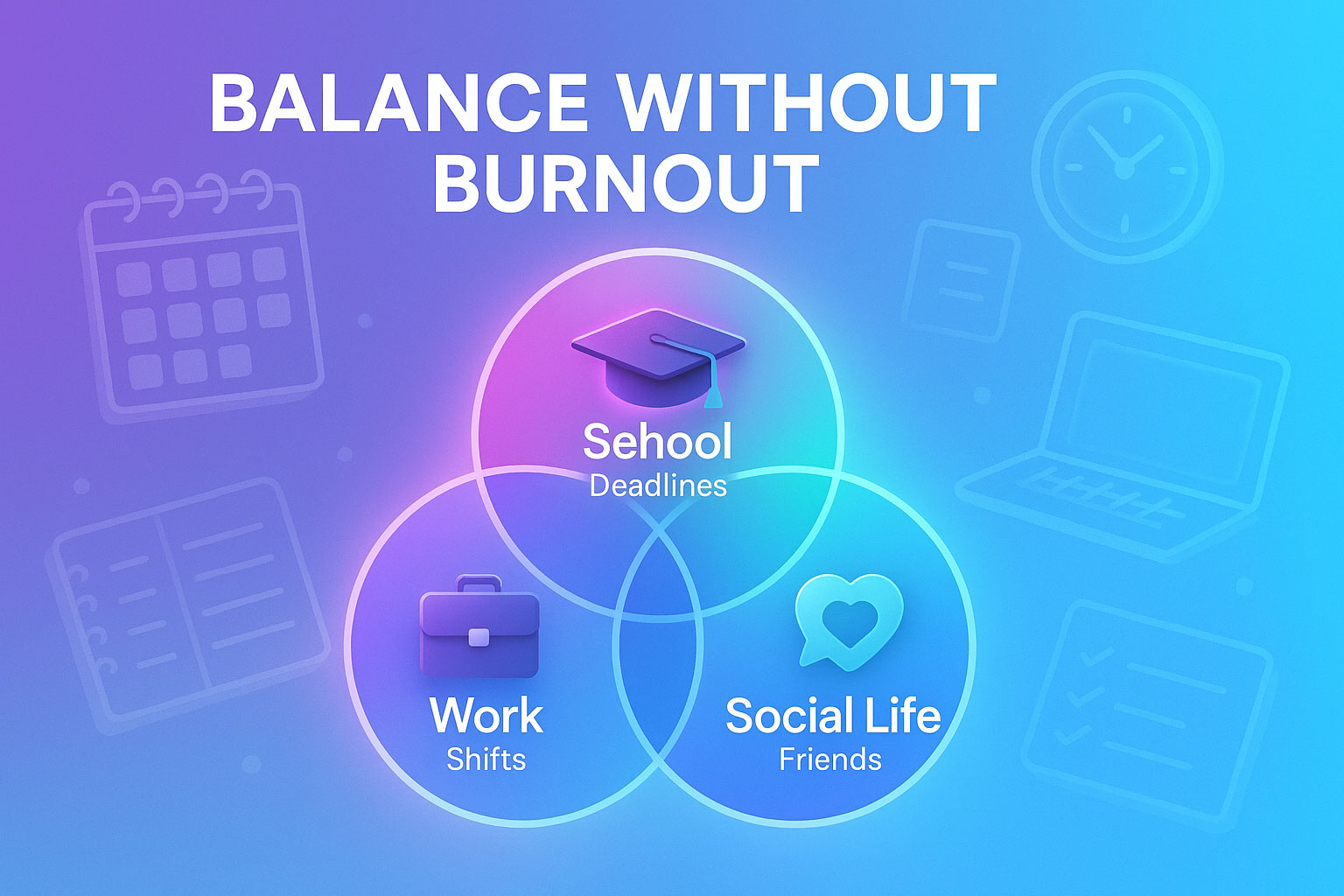
Sometimes it feels like there’s not enough of me to go around. Back in college, I was juggling 18 credits, working 30 hours a week at a coffee shop, and still trying to have some kind of social life. There were nights I fell asleep on my laptop, mornings I missed class, and weekends I just wanted to disappear under the covers. Sound familiar?
If you’ve ever stared at your calendar and wondered how in the world you’re going to survive the week, you’re not alone. It’s really easy to burn out when you’re being pulled in three directions at once: school, work, and relationships. But it’s also doable,with a little structure, a whole lot of honesty, and some smart strategies.
Here’s what I learned (the hard way):
- How to set priorities when everything feels important
- Creating a flexible schedule that doesn’t break down after one unexpected text
- Making space for friendships without sacrificing grades or sleep
- Learning to say no without guilt
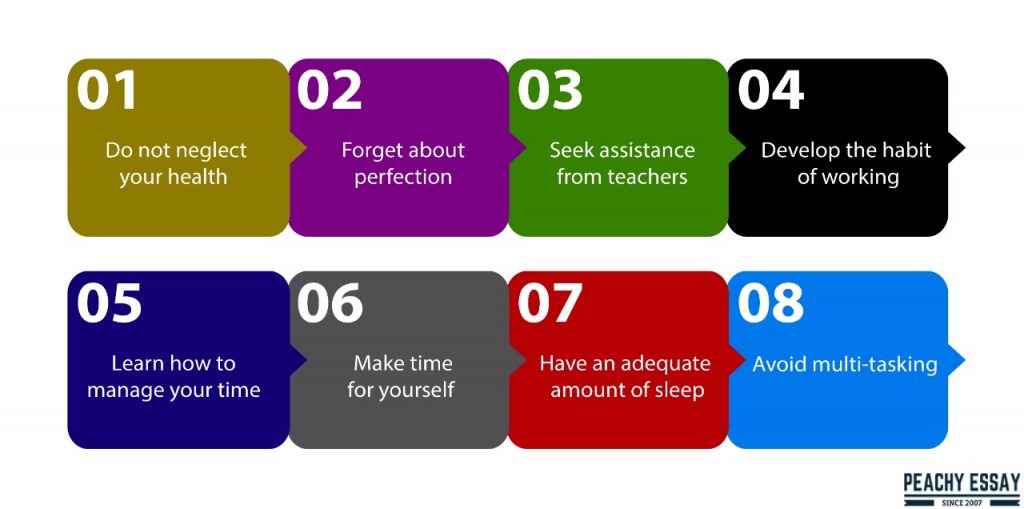
- Why self-care isn’t just bubble baths,it’s food, sleep, and boundaries
Whether you’re a student balancing two jobs or a night-school warrior with a toddler, this is for you. Let’s walk through it together.
If you’re still trying to figure out the right way to handle all the chaos, it might be time to revisit the core principles of Time Management for Students and build habits that align with your actual life,not an ideal one.
Why Balance Matters
When I ignored balance, everything collapsed. I snapped at coworkers, skipped classes, and ghosted friends. It wasn’t pretty. What I didn’t realize then is that balance isn’t about doing everything perfectly,it’s about not letting one thing swallow the rest of your life.
The effects of imbalance are real. It can mess with your sleep, wreck your focus, and stir up some nasty anxiety. According to the National Institutes of Health, college students dealing with heavy workloads and lack of downtime are more likely to report depression and chronic stress. I felt that in my bones.
Once I started building a flexible routine, things began to shift. It’s something I detail more in How to Create a Weekly Study Schedule, which breaks down how to set up your week for breathing room,without falling behind.
Build a Foundation with Planning
Set Weekly Priorities and Use a Planner
I started using a paper planner after digital ones overwhelmed me. Every Sunday, I sit down and write out my classes, shifts, due dates, and any hangouts or family events. I highlight my top three non-negotiables for the week,usually a major exam, a work training, and a friend’s birthday dinner.
This little ritual changed everything. Seeing it all laid out helped me stop saying yes to things I didn’t actually have time for.

Create Daily Routines for Efficiency
My weekdays run on habit now. I wake up at 6:30, even when I don’t want to. Breakfast, 30-minute review, class or shift, then a power nap (if I’m lucky). Dinnertime is sacred, and so is my 9 p.m. wind-down,no phone, no laptop, just music or journaling.
Routine saves mental energy. You don’t have to keep figuring out what to do next. It lets your brain breathe.
Plan for the Unexpected
One time, I got called in for a double shift the night before a major exam. I panicked. Now I block out “buffer time” on Fridays or Sundays,free space to catch up if things go off track. If I don’t use it? Even better. It becomes a guilt-free break.
| Time | Activity | Zone (School / Work / Social) |
|---|---|---|
| 7:00 AM – 9:00 AM | Review notes, breakfast | School |
| 9:30 AM – 4:00 PM | Work shift | Work |
| 5:00 PM – 6:30 PM | Dinner with friends | Social |
| 7:00 PM – 9:00 PM | Study + buffer time | School |
Healthy Boundaries Between Responsibilities
Separate Work, School, and Social Zones
Blending everything together made my brain feel foggy. I started doing schoolwork only at the library, taking work calls only in the breakroom, and hanging out only in shared living spaces. No studying in bed, no texting friends at work. Compartmentalizing like that helped me stay present,no more half-working, half-scrolling nonsense.
Know When to Say No
One weekend, I agreed to cover a coworker’s shift, help a friend move, and attend a group project meeting. I ended up doing all three badly. Since then, I ask myself: “Do I want to do this or just feel like I should?” If it’s not a clear yes, it’s a no.
Align Social Activities with Academic Goals
Instead of dropping $30 on a brunch I couldn’t afford or staying up until 2 AM at a party, I started inviting friends to join my study sessions or fitness classes. My favorite? Walking with classmates while reviewing notes. That way, I was catching up on school and people,without sacrificing sleep.

Social-Study Integration Tips
Study groups don’t have to be boring. One semester, I formed a group that met at our favorite cafe every Thursday night. We’d quiz each other with flashcards, swap lecture notes, and share cheap pastries. It wasn’t just academic,it was connection. I looked forward to it every week.
Try mixing in these social-study hacks:
- Quiz each other during group walks or workouts
- Watch recorded lectures together, then discuss
- Use shared Google Docs for live collab
These ideas helped me feel like I wasn’t going it alone. And they made school… kind of fun?
Employer and Instructor Communication
Being upfront about your schedule makes all the difference. I used to hide the fact that I had midterms from my boss, which backfired every time. Now I give my employer a heads-up when a big school project is coming. Most of the time, they’re flexible,as long as they know early.
Same goes for professors. I email them the moment I know a shift might conflict with a lab or deadline. Most teachers appreciate the communication. Pro tip? Use a polite, short email like:
“Hi Professor Nguyen, I wanted to let you know I have a scheduling conflict with my part-time job next Thursday during lab. Is there a way I can attend a different session or make up the work? I really want to stay on top of things. Thanks!”

Self-Care and Mental Health
Physical Health Routines for Busy People
There were days I forgot to eat. My skin broke out, my energy tanked, and I felt like trash. Now, I keep snacks in my bag and prep simple meals on Sundays,rice bowls, overnight oats, frozen veggies. I also swapped the idea of “working out” for just moving,walking to class, dancing in my room, even stretching before bed.
Even 15 minutes of movement can shake off brain fog. Don’t overthink it. Just move.
Mental Wellness and Stress Relief
My anxiety used to peak around 2am,right when I was trying to fall asleep. What helped? Journaling before bed, deleting toxic apps, and giving myself permission to log off. I also keep a “stress shelf” with lavender oil, a heating pad, and my favorite novel. That little corner is my soft place to land when the world gets loud.
When to Seek Support
If you feel overwhelmed more days than not, please talk to someone. I went to campus counseling after crying in a bathroom stall during finals. It wasn’t weak,it was necessary. They helped me see that I wasn’t broken. I was exhausted and needed help. If your school has a wellness center, use it. If not, reach out to hotlines, mentors, or online therapy apps.
If you’re looking for concrete ways to protect your energy throughout the week, Weekend Time Management Strategies has some great advice on using downtime for both rest and reset,without guilt.
FAQ
How do I balance full-time work with school?
You need tight boundaries. Treat school like a second job with set hours. Use time blocking, batch similar tasks, and look into asynchronous or online class options. Communicate with both your boss and professors so they understand your limits.
What if my job doesn’t allow schedule flexibility?
Some jobs are rigid. If you’re constantly forced to miss class or pull all-nighters, it may be time to reevaluate if that job is sustainable long term. Explore on-campus roles, gig apps with custom hours, or talk to HR about part-time shifts during the semester.
Can I still have fun while being busy with school and work?
Absolutely. Fun just looks different. Instead of partying until 4am, maybe it’s brunch on Sunday, game night, or studying with your favorite playlist. Social time doesn’t have to be loud or expensive. Make space for joy in the in-between moments.
Recap of Key Points
Balancing school, work, and a social life isn’t about being perfect. It’s about being honest,with your time, energy, and priorities. Using a planner, saying no, building a routine, and asking for help? All of that matters. And none of it has to be fancy.
Final Takeaway
I used to think burnout was a badge of honor. Now I know better. Taking care of yourself is how you stay in the game,not how you fall behind. Find a rhythm that respects your limits and supports your goals.
Closing Thought
Your time is valuable. So is your health. So are your relationships. You don’t have to choose between them,you just have to protect your space. One small shift at a time, you can find balance. And when you do, everything feels a little lighter.