
How to Plan Long-Term Assignments Without Last-Minute Stress

I’ve blown big assignments before. Like, full-on panic-mode, no-sleep, caffeine-fueled regret. Maybe you’ve been there too,thinking you had plenty of time, then realizing the night before it’s due… nope, you really didn’t.
That sinking feeling? I never wanted to feel it again. So I forced myself to learn how to actually plan out long-term assignments, not just “think about doing them.” And trust me, it changed everything.
The problem is most people wait too long, or plan like robots,rigid, over-optimistic, no backup strategy. Then when life throws a curveball (it always does), things collapse.
So I’m gonna walk you through a human-first, flexible approach that works. I’ll share what helped me submit early, stress less, and even get compliments on how well thought-out my projects were. Here’s what we’ll unpack:
- Why long-term planning isn’t optional anymore
- The exact step-by-step method I use to avoid burnout
- How to break tasks into actual do-able chunks
- Where tools like Notion, Trello, and paper planners shine
- What most people forget (and regret) in their planning
By the time you’re done reading, you’ll have a realistic system,not some idealistic method you’ll never touch again. Let’s stop cramming and start cruising.

Why Long-Term Planning Matters
Benefits of Structured Assignment Planning
Once I started planning properly, my anxiety dropped like crazy. I slept better. I even had time to revise,and not just once. With a proper system in place, you actually create space to breathe. You spot problems early. You ask for feedback and still have time to apply it. That’s a whole different energy than panicking the night before.
Common Pitfalls of Last-Minute Work
When I didn’t plan, everything snowballed. I’d forget critical sources, scramble to find data, or turn in something half-baked. It’s not just about grades either,missing deadlines messes with your self-esteem. You start doubting your ability when in reality, it’s your system that’s broken, not you.
Step-by-Step Guide to Planning Long-Term Assignments
Understand the Final Goal
Before writing a single word or opening a Google Doc, I always figure out what “done” actually looks like. Is it a 10-page paper? A research poster? A client pitch deck? Define success clearly. Then reverse-engineer everything from that finish line.
Break Down the Assignment
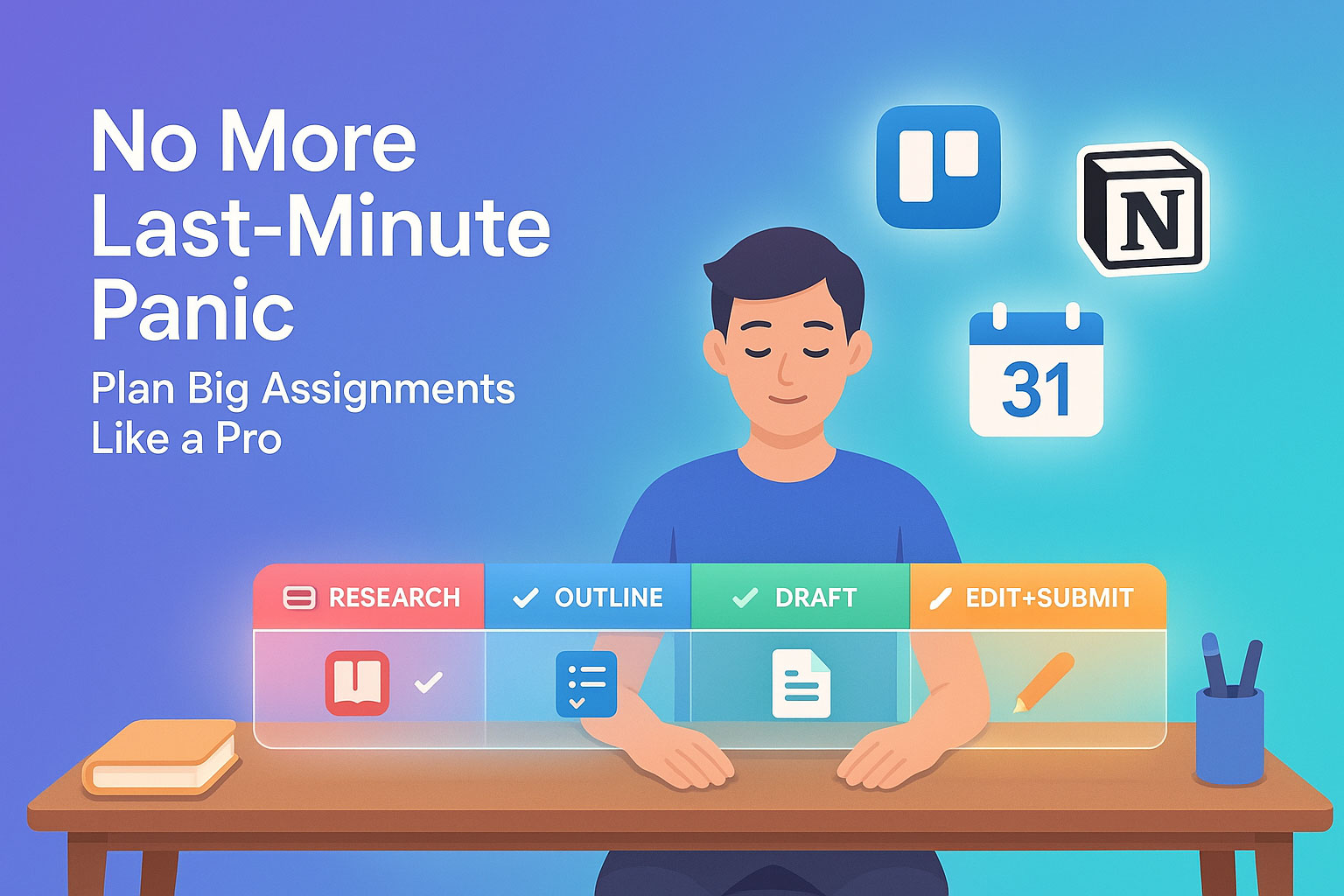
This part changed my life. Instead of seeing a giant mountain, I break it down into tiny hikes. For a term paper, for example, I’d split it like this:
| Phase | Task | Estimated Time |
|---|---|---|
| Research | Find 5 credible sources | 2-3 hours |
| Outline | Build structure in Notion | 1 hour |
| Draft | Write first 3 pages | 4 hours |
| Edit | Revise and format citations | 2 hours |
Seeing those chunks? Way less scary than a looming deadline.
Create a Timeline with Deadlines
I work backwards. If it’s due in four weeks, I set mini-deadlines: research by Week 1, draft by Week 2, revision in Week 3. That way, I’m never stuck wondering “what do I do today?” I already know.

Use Planning Tools
I’ve tried a lot,paper planners, Google Sheets, even random sticky notes. What stuck? A combo of Notion for outlining, Trello for checklist tasks, and a physical calendar above my desk. Pick what works for you, but use something. Seeing your plan makes it real.
Build in Buffer Time
This part is essential. I always add 2–3 days extra before the actual deadline. Why? Because tech fails. Life happens. I’ve had laptops crash, Wi-Fi cut out, and once my professor moved the deadline forward. That buffer saved me every time.
Monitor Progress & Adjust
Halfway through, I always check,am I behind? Ahead? Need to shift anything? Don’t be afraid to tweak. Sticking rigidly to a failing plan is worse than pausing to pivot.

Tools & Strategies to Stay on Track
Recommended Planning Tools
Here’s what I rely on regularly:
- Notion , I use this to write outlines, set up deadlines, and even clip research links.
- Trello , Great for turning big projects into boards with mini-tasks. I move cards around as things shift.
- Google Calendar , Everything goes in here. If it’s not scheduled, it doesn’t happen.
- Physical wall calendar , It might sound old-school, but seeing tasks in my room keeps them in my head.
If you’re more tactile, get a paper planner. If you’re digital, set up reminders. The point isn’t the tool,it’s making it yours.
Accountability Strategies
I’ve found planning works even better when someone else is watching. I used to work with a friend where we’d meet weekly, just to ask: “Did you hit your goals?” Not to judge,just to stay honest. Teachers can help too, especially if they know your timeline.
If you’re working solo, try journaling weekly progress. It keeps you focused on what’s done and what’s left.
Time Management Techniques
There are so many hacks out there, but here are the few that actually stuck with me:
- Pomodoro , 25-minute sprints with 5-minute breaks. Keeps me sharp.
- Time Blocking , Scheduling actual blocks on your calendar for “Research” or “Edit” makes it real.
- Eisenhower Matrix , When I feel overwhelmed, I sort tasks by urgency and importance. Helps me know where to start.
Solid planning only works when paired with strong time management. For a deeper look at tools like time-blocking, Pomodoro, and energy-matching tasks, check out these tips on managing your time as a student. Building better time habits is the foundation for any successful long-term project.
Adapting Your Plan to Life Events
Planning Around Personal Conflicts
I’ve had assignments due the week of family trips or exams. The fix? Start earlier. Like a full week earlier. If I see a big event coming, I front-load the work. You don’t want to be writing at a wedding or revising during finals.
Dealing with Unforeseen Delays
Buffer time helps, but sometimes things go sideways. I once lost all my notes the day before I was supposed to start writing. Instead of giving up, I used a weekend to regroup. Plans should bend, not break. This is why monitoring your timeline is gold,you’ll always know where you stand.
When to Reevaluate Your Plan
If you’re more than one milestone behind, don’t just ignore it. Pause, look at what’s blocked you, and redo the rest of your schedule. Planning isn’t failure-proof,but flexible planning is bounce-back proof.
FAQs
How early should I start a long-term assignment?
I aim to start within 24–48 hours of getting it. Not working hard,just opening a doc, listing steps, and maybe blocking calendar time. That first move makes it real.
What if I miss a planning milestone?
It’s okay. Don’t throw the whole plan out. Just reschedule. Trim fluff if needed. The important part is knowing what was missed and adjusting,not pretending it didn’t happen.
Is digital or paper better for planning?
Honestly? Use both if you want. I love digital for portability and reminders, but I also keep a physical checklist. Choose what you’ll actually use, not what’s trending.
Epic Wrap-Up
So here’s what we’ve covered: you need a plan, but not just any plan,a human one. Break big assignments into tiny chunks. Work backward from the due date. Schedule deadlines you’ll actually meet. Use tools that speak your language. And leave room for the stuff you can’t control.
If you’re tired of cramming, or feeling overwhelmed by another huge project on the syllabus, this method works. It’s not magic,it’s just honest planning, with room to breathe.
You don’t need to be perfect. You just need to be prepared. And once you are, those big, scary projects? They start to feel way smaller.