Best Note-Taking Techniques to Boost Learning and Retention

Some days, I swear I’d forget my own name without notes. Back in college, I was scribbling away during every lecture, yet half of it never stuck. Sound familiar? I tried every tip in the book , highlighters, sticky notes, recording lectures. But it wasn’t until I found the right note-taking technique that things finally clicked.
Here’s the problem , most people don’t take notes to remember. They take notes to capture. But capturing isn’t enough. You’ve got to process, understand, and organize info so it actually stays in your brain (and doesn’t die in a forgotten notebook).
So what’s the fix? Learning a method that matches your style. Whether you’re a visual thinker, a fast-talking brainstormer, or someone who just needs structure , there’s a note-taking style for you.
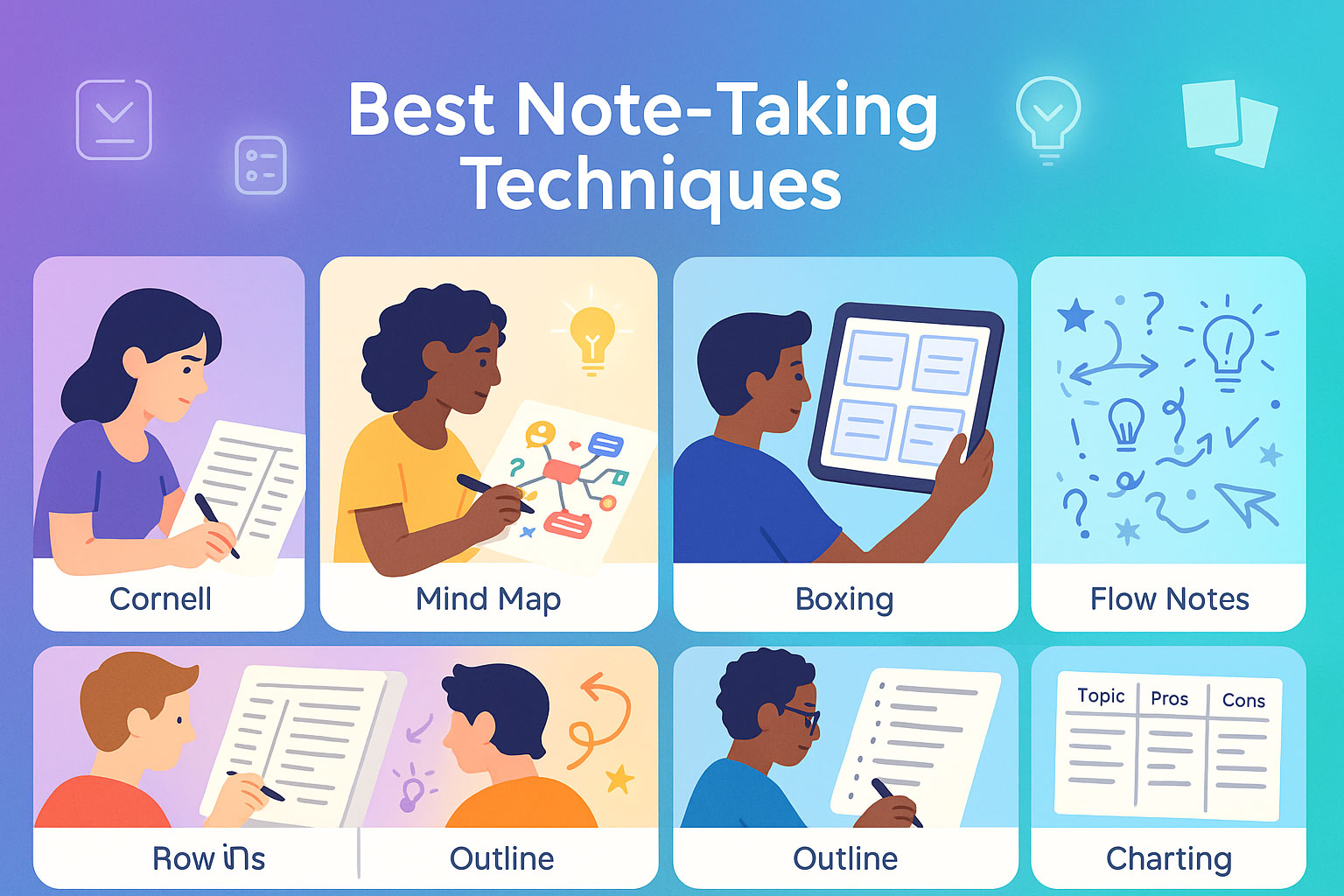
- The Cornell Method , structure that helps you review
- Mind Mapping , great for visual learners
- Boxing , keeps topics separated and tidy
- Flow Notes , for thinkers who can’t sit still
- Outline, Sentence, and Charting Methods
I’m gonna show you each one. Real photos. Real tips. Real pros and cons. If you’re tired of rewriting your notes over and over and still forgetting, this guide’s gonna help.
Why Note-Taking Matters
I didn’t get this until I bombed a midterm. Turns out, research shows that writing notes boosts retention better than typing , especially when you summarize instead of transcribe. Why? Because you’re mentally filtering info, not just copying.
Here’s what quality note-taking does for you:
- Improves recall through active engagement
- Clarifies complex topics (especially in science and history)
- Supports faster studying later on
- Makes connections you didn’t even know you missed
Overview of the Most Effective Note-Taking Methods
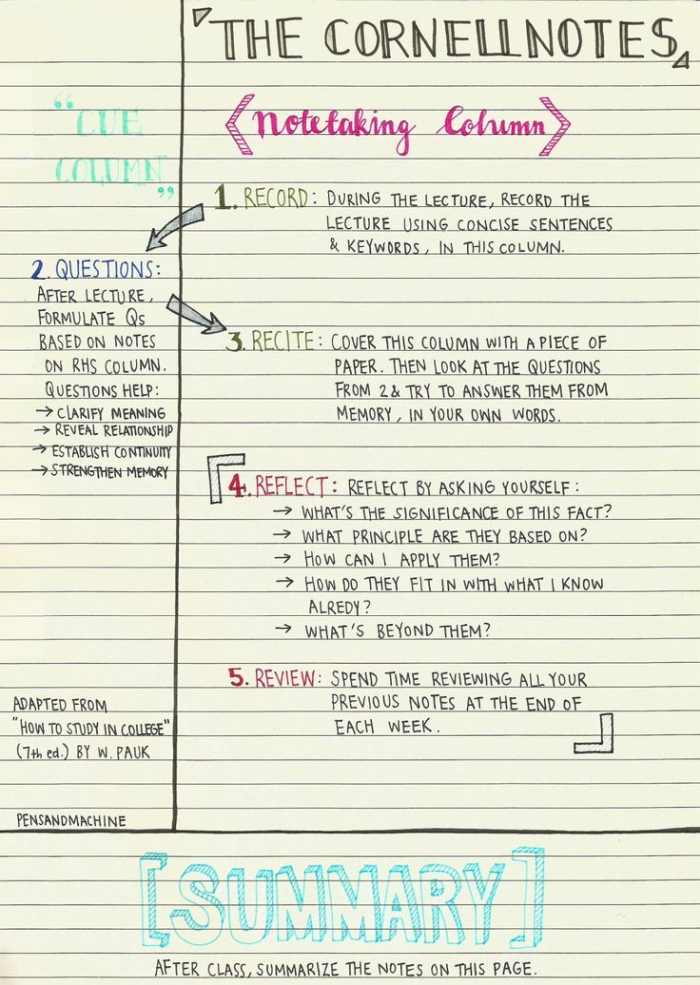
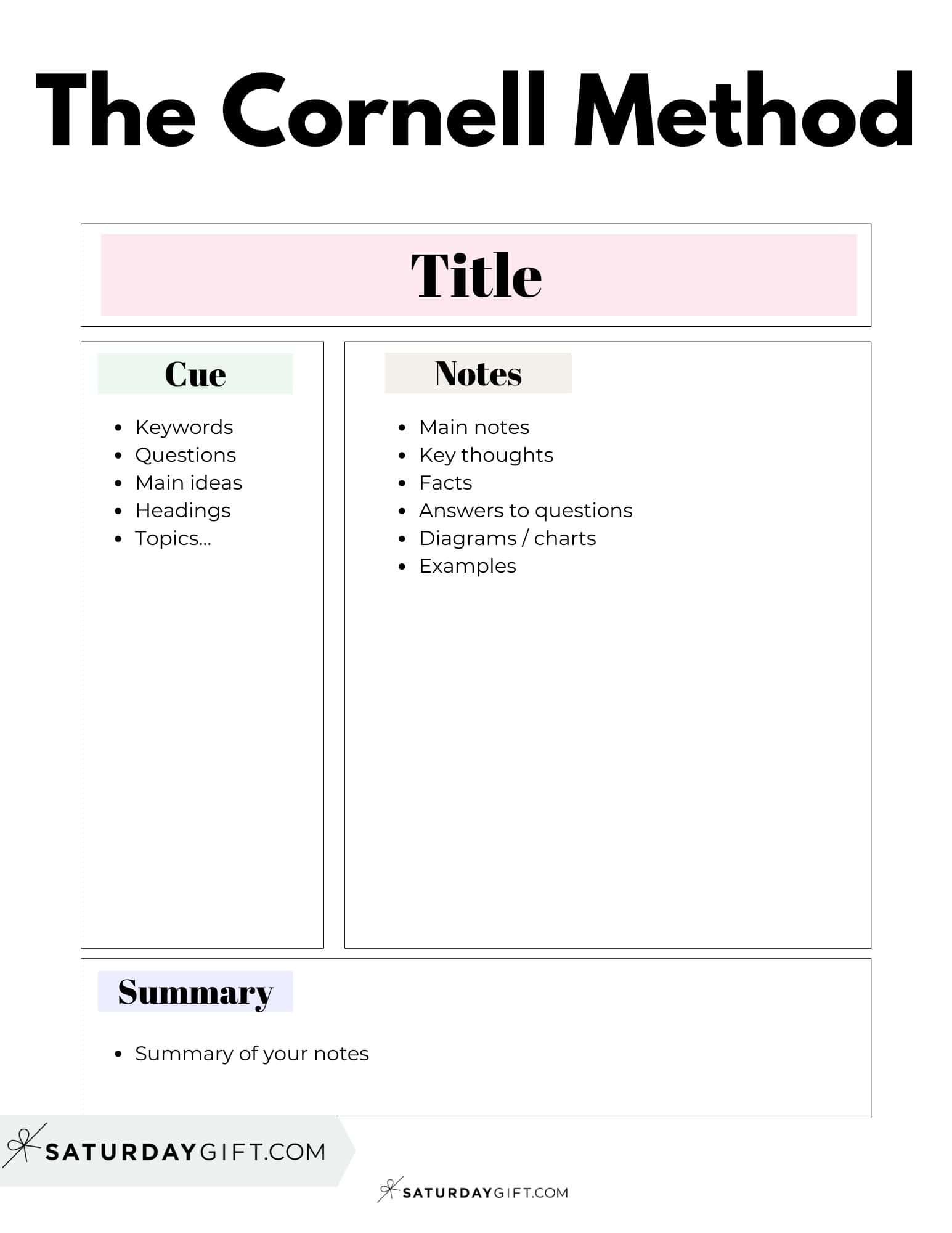
The Cornell Method
The first method I ever fell in love with. I was skeptical , it looked like a worksheet from elementary school. But after using it for psychology and anatomy? I got it.
The page is split into three zones:
- Right side: take notes during class or reading
- Left margin: add keywords, questions after
- Bottom: write a short summary
It forces you to revisit and reflect , and that’s the secret sauce. That bottom summary saved me during finals more times than I can count.
Outline Method
Clean. Structured. Familiar. The outline method is what most teachers actually teach, and it works best when your lecture or textbook follows a logical order.
It looks like this:
- Main Topic
- Sub-point
- Supporting detail
- Sub-point
I use this when I read technical material or listen to organized speakers. It’s easy to scan and helps me pick out key concepts quickly. This method also plays well with subject-specific study strategies, where structured thinking is essential.
Mind Mapping (Mapping Method)
I’m a messy thinker, so this one speaks to my brain. You start with a central idea and then branch out like a web. Draw connections with arrows, images, and colors.
I used it in project planning, brainstorming essays, even prepping for job interviews. It works because it’s not linear , it mirrors how the brain jumps around. Visual folks, you’ll love this.
Charting Method
This one saved my GPA in history class. If you’ve got facts, comparisons, dates , put them in a chart. You’ll immediately see patterns.
Here’s a basic example:
| Method | Best For | Pros | Cons |
|---|---|---|---|
| Cornell | Review & retention | Organized, reflective | Time-consuming |
| Mind Mapping | Visual learners | Engaging, creative | Can get messy |
| Charting | Data-heavy topics | Clear comparisons | Not flexible |
Sentence Method
If your teacher talks a mile a minute , try this. You write every new idea on a separate line. No structure, just fast recording.
It’s basic. Almost too basic. But if you’re in survival mode, it’s better than missing something entirely. I always rewrite these notes later into a better format when I can.
Boxing Method
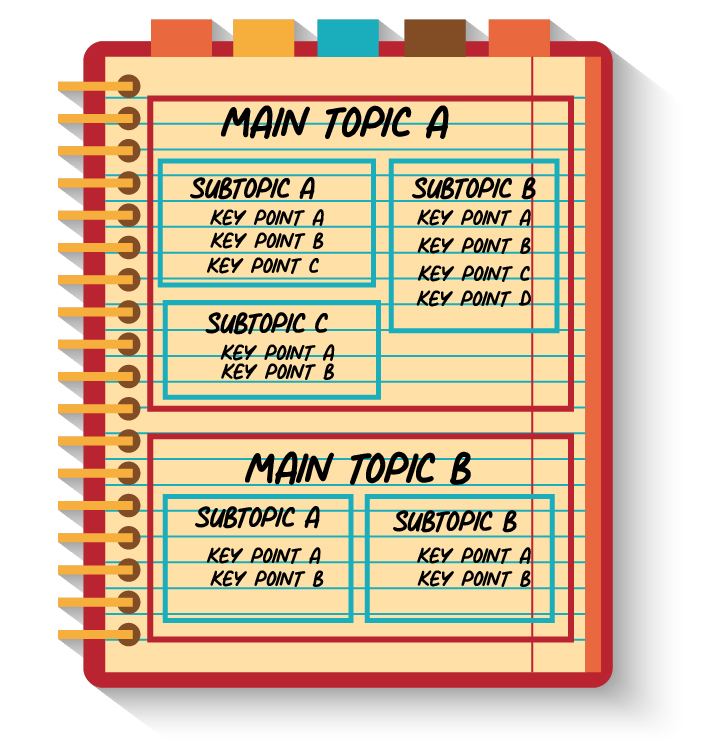
I discovered this one late , and wow, I wish I had it earlier. Each topic or idea goes in its own box. Literally. You draw a box around chunks of notes to group them.
This method is perfect when switching topics often , like in meetings or fast-moving classes. Keeps everything in its own lane. Great for digital too (apps like Notability do it well).
Flow Notes
This is my go-to when I’m trying to understand instead of memorize. It’s like doodling while thinking , arrows, connections, ideas , all over the place, but meaningful.
I used this in philosophy class where ideas bounced around. You won’t find much order here, but you will find understanding. And that’s sometimes more useful than clean margins.
How to Choose the Right Note-Taking Technique
I used to switch methods weekly , not because I was indecisive, but because different classes needed different styles. What worked for calculus didn’t cut it for sociology. So how do you figure out what’s right for you?
Start with your learning style. Seriously, take five minutes and think about how you naturally absorb stuff. Visual? Auditory? Tactile? Then match the technique that fits your brain’s rhythm. If you’re unsure where to begin, this guide to learning style tips can help you identify the best methods for how your brain works.
For Visual Learners
If you think in images or colors, traditional line-by-line notes won’t cut it. Go with:
- Mind Mapping – draw ideas, use arrows, color-code relationships
- Boxing – group related chunks in visual blocks
- Charting – build tables that show contrasts or timelines
Try drawing tiny icons next to key terms. I used to doodle a little brain next to psychology theories. Silly, but I remembered them during exams.
For Auditory Learners
If you retain more from listening, focus on strategies that leave room for review and reflection. My go-to recommendations:
- Cornell Method – you can summarize after listening
- Sentence Method – helps you quickly jot while following audio
- Flow Notes – lets you respond organically while listening
Also , record your lectures (if allowed) and pair audio with your notes later. I used to listen while walking. Game changer.
For Kinesthetic Learners
You need to move. You learn by doing. So your notes should do something too:
- Flow Notes – because it’s messy, hands-on, and intuitive
- Mind Mapping – draw and build connections physically
- Boxing – reorganize ideas as you go
Sometimes I would even write notes on sticky notes and move them around a wall to study. Don’t limit yourself to a notebook.
Tips to Improve Your Note-Taking Skills
Even the best method falls flat if you’re distracted or rushing. Here’s what took my notes from messy to memorable:
Use of Symbols, Colors, and Diagrams
I started using stars for important ideas, arrows for cause-effect, and colors for topics. Suddenly, my notes became maps , not just lists. The trick is making it your system so your brain recognizes it instantly.
Reviewing and Summarizing Notes Regularly
I used to cram the night before. Don’t. Instead, review your notes within 24 hours, then again later in the week. This repetition boosts memory retention like crazy.
Digital Tools for Note-Taking
Apps like Notion, OneNote, and GoodNotes have built-in templates for Cornell, mind maps, and even flow notes. I use Notion for everything now , synced across my laptop and phone. It’s magic. For more options and tech-enhanced strategies, explore these digital study tools that can streamline and personalize your workflow.
FAQ
What is the most effective note-taking method?
There’s no universal best. But for retention and review, the Cornell Method ranks high. If you’re visual, go with mind maps. If you’re short on time, sentence method works. It all depends on your learning style and subject.
Should I take notes on a laptop or by hand?
Handwriting wins for memory. A 2014 Princeton study found that students who took notes by hand understood concepts better. But for speed and organization, digital has perks. I use both, depending on the setting.
How can I improve my note-taking speed?
Use abbreviations, symbols, and skip full sentences. Write the essence, not every word. Practicing shorthand helps too , like using “∴” for “therefore” or “w/” for “with.” And don’t be afraid to paraphrase , your brain learns better that way.
What’s the best note-taking method for visual learners?
Mind Mapping and Boxing. They give you structure and creativity at the same time. Charts are also gold for comparing ideas. Add drawings, symbols, or even little doodles , anything that turns your page into a mental image.
Recap of Key Points
You’ve just seen seven powerful ways to take notes , each with its own personality. From structured outlines to visual maps to fast-flowing scribbles, there’s a method that’ll click with how you think.
So here’s the takeaway: pick a style, try it out, and tweak it. You’re not locked into one way. I switch styles between meetings, study sessions, and even moods. The key is to stay curious and notice what helps you remember.
Want to go deeper? Try combining styles. Cornell + Mind Map. Chart + Outline. Make your notes as unique as your brain. And don’t forget , review often, color boldly, and make your notes yours.