How Scheduling Breaks Can Help You Beat Burnout

Last year, I hit a wall. Not the “I need a nap” kind, the kind where even coffee couldn’t bribe me back to life. My calendar was full, my brain was foggy, and every day felt like pushing a broken shopping cart uphill. I wasn’t lazy. I was burned out. Sound familiar?
Burnout sneaks up when we push through fatigue and ignore our natural rhythms. We think rest is a reward,when it should be part of the work. The problem? Most of us never learned how to schedule breaks that actually help.
Here’s the truth: not all breaks are equal. Done right, they reboot your focus, reset your mood, and boost creativity. Done wrong, they just become social media scroll-fests that leave you feeling guiltier and more tired.
- How stress builds up without proper rest
- Break methods like the Pomodoro and ultradian rhythm
- Why short breaks matter just as much as long ones
- How to pick the right method for your energy levels
- Real apps and tools that remind you to stop working
If you’re tired of being tired, this guide gives you everything you need to make breaks work for you. Not theoretical fluff,practical, tested, and human.
Why Breaks Matter
The Biology of Burnout
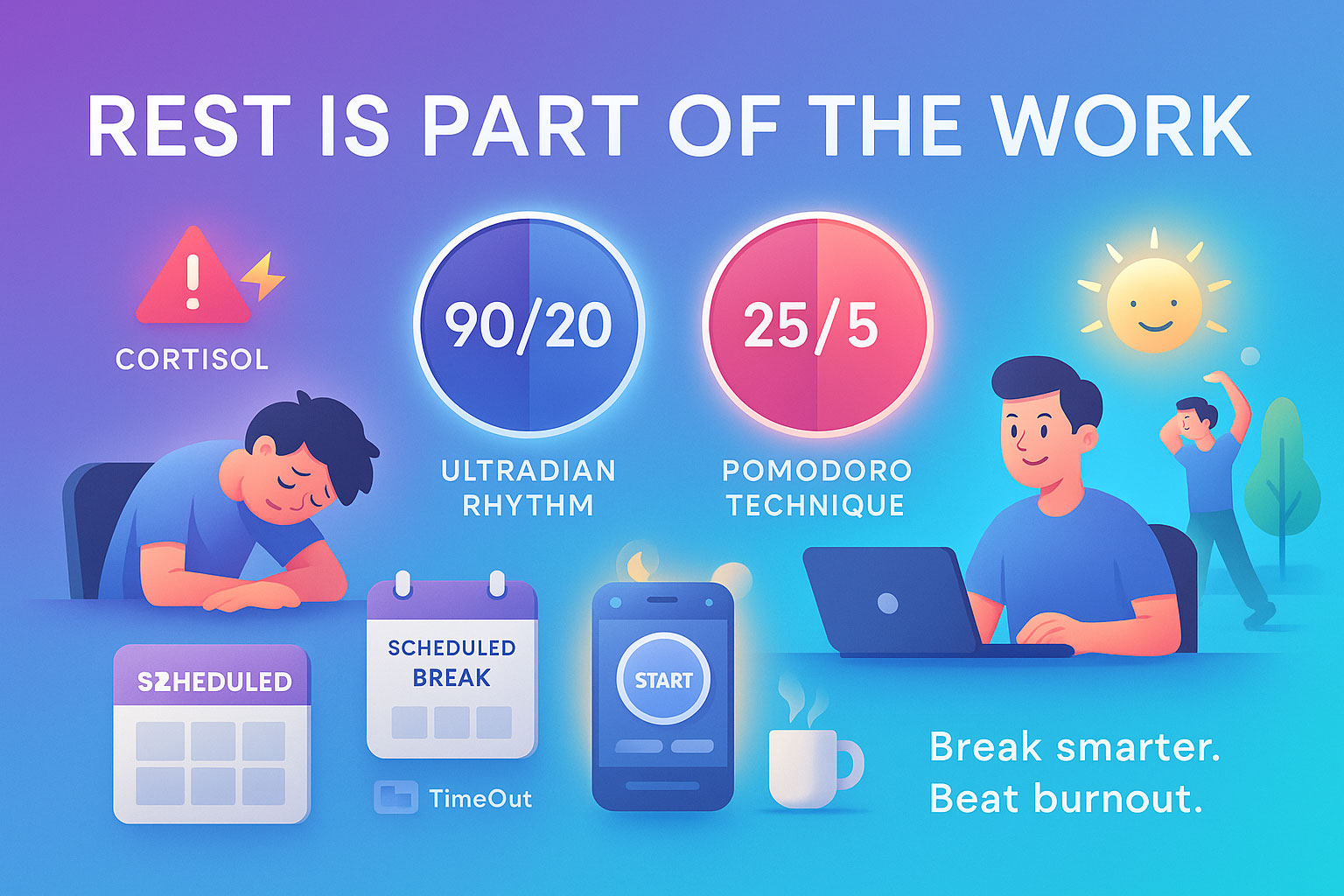
Let’s talk about cortisol. That’s your body’s stress hormone. When you skip breaks and hustle nonstop, your cortisol stays high. Over time? That fries your nervous system and turns your “get stuff done” mode into full-blown anxiety.
Ever tried solving a problem after five straight hours of Zoom calls? Your brain literally shuts down. I used to write marketing copy in sprints, and I’d start missing typos, misreading briefs, or worse,forgetting words entirely. That’s mental fatigue, and it creeps up like a slow fog.
According to neuropsychology studies, your focus works best in natural 90-minute cycles. Ignore those, and you’re working against your biology.
Signs You’re Headed for Burnout
Burnout doesn’t show up overnight. It creeps in. These were my red flags:
- I was forgetting simple stuff,like my own deadlines
- Tasks that used to take 30 minutes now took 2 hours
- I snapped at coworkers (and my dog) for no real reason
- Every Sunday felt like a countdown to dread
If any of that hits too close to home, you’re not alone. And you’re not broken. You’re tired. And scheduling breaks to prevent burnout might be your ticket out.
Break Scheduling Methods That Work
Ultradian Rhythm Method
This one changed the game for me. The ultradian rhythm is a natural 90-minute cycle your body runs during the day. You focus, perform, and then,you guessed it,your body wants rest. I started setting alarms: 90 minutes work, 20 minutes real break. Not “check email” break. Like, walk-the-dog, sip-some-tea break. Productivity shot up. Anxiety down. It worked because it matched how my brain wanted to function.
Key Features: Works with your biology, not against it. Best for deep work days. Also helps regulate sleep later because you’re not overstimulating your nervous system.
The Pomodoro Technique
Shorter attention span? The Pomodoro is your friend. It’s 25 minutes of work, 5 minutes of break, repeat 4 times, then take a longer break. Great for email-heavy tasks or writing sprints. I use it when I feel fidgety and can’t focus long.
Bonus Tip: I use the Focus Keeper app. The ticking sound is oddly comforting. Keeps you honest.
| Method | Work Duration | Break Duration | Best For |
|---|---|---|---|
| Ultradian Rhythm | 90 min | 15–20 min | Deep focus, cognitive tasks |
| Pomodoro | 25 min | 5 min (longer after 4 rounds) | Quick tasks, distractions |
Micro-Breaks and Meal Breaks
Let’s not forget the little stuff. A 3-minute stretch. A deep breath. A walk to refill your water. These aren’t wasted minutes,they’re investments. Studies show even 5-minute breaks can reset attention and improve memory.
As for lunch? Step away from your desk. I mean it. Eat outside if you can. Your brain needs the break as much as your body needs the food.
Implementing a Break Strategy That Sticks
Customize Based on Your Energy Patterns
This took me a while to learn, but now I swear by it: track your energy. Notice when you naturally dip. For me, it’s always 2:30pm. That’s when I step out for a walk or just rest my eyes. If you’re a morning person, put your heavy stuff before noon. Save admin work for when your energy dips.
Understanding your energy cycles is key to building a smarter workflow,and it’s also one of the foundational ideas in Time Management for Students. Once you align your breaks with your energy patterns, your productivity improves without the burnout.
Tech Tools That Help
I’ve tried a dozen tools, but Focus Keeper and TimeOut are my go-tos. They block screens, play gentle reminders, and make it easy to walk away without guilt. Want something fancier? Try DeskTime or RescueTime for reports that show when you’re drifting. Data helps make it real.
Make Breaks Intentional
Don’t let breaks become scroll-holes. Here’s what works better:
- Walks with no phone
- Stretch or foam roll while listening to a podcast
- Breathing exercises,just 2 minutes can clear your fog
- Call someone you love (or your dog, I won’t judge)
Make it a rule: if your break doesn’t nourish you, it’s not a real break.
Long-Term Rest: Beyond Daily Breaks
Daily pauses are great,but they’re not enough. Every six weeks or so, I take a real break. A long weekend. A trip somewhere green. No laptop. No Slack. Just me, resetting. That’s what my therapist calls deep rest, and it’s been a game-changer.
Research from 15minutes4me shows extended downtime,vacations, personal days, full digital detoxes,can restore mental clarity faster than any afternoon nap ever could. If you can’t take time off soon, even planning it gives your brain something to look forward to. That anticipation is healing in itself.
FAQs
What is the best break schedule to avoid burnout?
There’s no one-size-fits-all plan, but two proven ones are the Pomodoro Technique (25/5-minute cycles) and the Ultradian Rhythm (90/20-minute cycles). I suggest starting with one and adjusting based on your energy levels and work type.
Are short breaks or long breaks more effective?
Both matter. Short breaks (3–5 minutes) keep your mind sharp during the day. Long breaks (15–30 minutes or more) help recharge your emotional tank. Think of them as snacks vs. meals,for your brain.
How can I remind myself to take breaks consistently?
Use apps like Focus Keeper or RescueTime. I set alarms, too. After a while, your body starts to crave those breaks at the same times naturally.
Can taking breaks really increase productivity?
Yes. Studies from Deel and Alooba show that people who schedule breaks get more done in less time. You focus harder when you know a pause is coming.
Recap
We’ve covered why breaks are your secret weapon,not just for sanity, but for sustained success. I walked you through how the body burns out, the science-backed methods to stay sharp (hello Pomodoro and ultradian rhythm), and real tools to help build a break-friendly workflow. I even gave you my go-to apps and personal hacks.
Here’s the kicker: rest isn’t weakness. It’s the foundation of good work. Once I started respecting my body’s signals and baking in breaks, my output didn’t just improve,it felt better to make.
So if you’re feeling stretched thin, please,pause. Close that tab. Stretch your arms. Go outside. When you come back, you won’t just work harder. You’ll work wiser.