
How to Say No Without Guilt as a Student

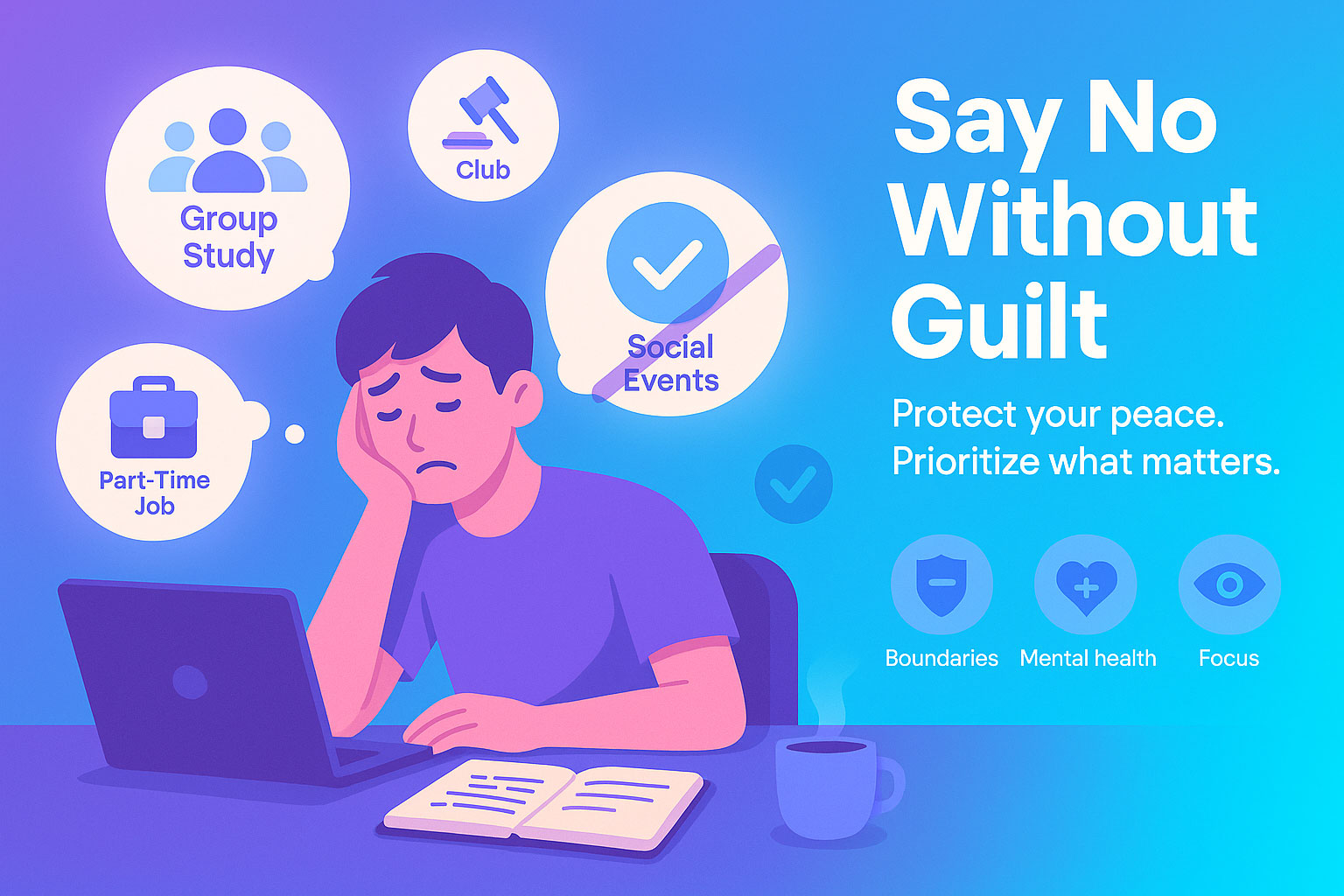
I used to say “yes” to everything. Group study sessions, club meetings, weekend plans, even those late-night snack runs I didn’t feel like joining. I was tired, overwhelmed, and honestly, kind of cranky. The worst part? I felt guilty every time I even thought about saying no. Sound familiar?
As a student, juggling deadlines, classes, part-time jobs, and a social life can feel like trying to hold water with open hands. Every request feels like another splash you have to catch. But what if you could learn to say no without drowning in guilt?
Today, I want to share how I figured out how to say no (kindly) while keeping my peace, my grades, and my relationships intact.
- Why saying no is hard when you’re a student
- What guilt really means and how to reframe it
- My go-to phrases when I need to turn something down
- How saying no has helped me get my time (and sanity) back
If you’ve been feeling stretched thin, stuck in yes-mode, or low-key annoyed with yourself for agreeing to too much, this one’s for you. Let’s walk through this together.
Why It’s Hard for Students to Say No
I used to think the word “no” was a confrontation. That if I said it, I’d disappoint someone, miss an opportunity, or lose friends. Turns out, a lot of students feel the same pressure. Here’s what usually holds us back.
People-Pleasing Tendencies
If you’re a “helper” or someone who thrives on being reliable, saying yes might feel like part of your identity. I used to feel like I was letting people down by saying no , even if I was exhausted. People-pleasing isn’t kindness, though. It’s self-abandonment dressed up as generosity.
Academic and Peer Pressure
You probably hear this all the time: “Join more clubs. Network more.
“Get involved!” can become “do everything!” It’s okay to skip extra projects or leadership roles if your schedule is already full. Protecting your time is healthy,especially when you’re also learning how to balance work and play effectively (Time Management for Students).
Fear of Missing Out (FOMO)
FOMO is real. I’ve said yes to way too many late nights just because I didn’t want to miss a memory. But here’s the thing , saying yes to everything means you’re saying no to rest, to clarity, to your own needs. Sometimes, choosing your peace means skipping a night out, even if it looks super fun on Insta.
How to Say No Nicely Without Feeling Guilty
The magic trick isn’t just saying no , it’s saying no in a way that respects both yourself and the other person. Once I found my own way to say it with kindness and calm, the guilt started fading.
Recognize and Accept Your Limits
This was a hard one. But when I finally admitted I couldn’t do everything , and more importantly, that I shouldn’t , I felt so much lighter. If your energy is tapped out, say so. Protecting your time isn’t selfish, it’s responsible.
Use Clear and Direct Language
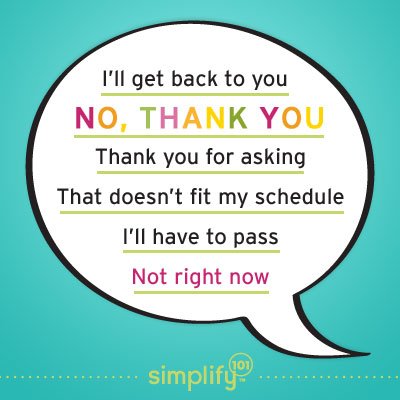
You don’t need a five-paragraph explanation. Try phrases like:
- “I’d love to, but I can’t commit to that right now.”
- “Thanks for thinking of me, but I’m focusing on [class/work/mental health] this week.”
- “I don’t have the bandwidth for that right now.”
Short. Polite. Honest.
Frame It with “I” Statements
This was a game changer. Instead of “I can’t help you” (which sounds harsh), I started saying things like, “I need to prioritize my sleep tonight,” or “I’m taking some time to recharge.” It puts the focus on your needs, not their request, which makes it less personal for both of you.
Practical Examples of Saying No
Let’s put this into context. Here’s a quick table that shows how I respond in real situations. Feel free to steal these lines for yourself.
| Scenario | What I Say |
|---|---|
| Friend invites you to a party during midterms | “I want to, but I’ve got to stay on top of exams. Let’s do something next week?” |
| Classmate asks you to join a new group project | “I’m already maxed out with other commitments , I wouldn’t be able to contribute well.” |
| Volunteer coordinator asks for extra help | “This week’s packed, but I’d be open to helping again later this month.” |
You don’t have to be cold. You just have to be clear.
Saying No to Friends
“Wanna come over and watch a movie?” Honestly, sometimes I’m just too tired. So I’ll say something like, “I’m wiped today, but I hope you have a great time!” Most real friends won’t be upset , they’ll respect you more for being honest.
Saying No to Teachers or Classmates
There’s a respectful way to push back. I once told a professor, “I appreciate the opportunity, but I’m balancing multiple deadlines this week and can’t give this my full attention.” He understood. It wasn’t personal. It was practical.
Saying No to Extracurricular or Volunteer Requests
I used to say yes to every club officer role or event volunteer sign-up. Now, I look at my schedule first. If it’s too tight, I say, “That sounds awesome, but I need to pass this time to avoid burning out.”
Tips to Overcome Guilt and Set Boundaries
Guilt creeps in even when you know saying no is the right thing. But guilt doesn’t mean you’re wrong. It just means you’re used to putting others first. Here’s how I work through it.
Delay Your Response
If you’re caught off guard, don’t rush. I often say, “Let me check my schedule and get back to you.” This gives me time to breathe, think, and make a choice that actually fits my life. You’re allowed to take that space.
Avoid Over-Apologizing
I used to open every no with “I’m so sorry…” But constantly apologizing trains your brain to feel wrong for having boundaries. Now, I start with appreciation instead: “Thanks for thinking of me,” or “I really appreciate the invite.” It shifts the energy from guilt to gratitude.
Focus on Long-Term Goals
Saying no today might protect your tomorrow. When I skip a social plan to rest or study, I remind myself why: I want to graduate feeling proud and healthy. That mental reframe changed everything. The more you align your choices with your goals, the easier it becomes to speak up.
Additional Advice and Support
Some mental stress can creep in even when you do the right thing. Strategies for managing that,including how to remain calm, assertive, and focused,are explored in Overcoming Procrastination with Time Management Tricks.
For students building productive habits around planning, study routines, and personal boundaries, I also recommend tools from Daily Planner Templates for Students to reinforce intention and structure.
FAQ
How do I say no without hurting my friends’ feelings?
Start with kindness. Let them know you care, then explain where you’re at. Saying, “You matter to me, but I really need to recharge tonight,” is honest and warm. Good friends will understand. If they don’t, that’s their growth to do , not your burden.
What if I regret saying no later?
That happens. Sometimes you’ll say no and later wish you’d gone. But I’d rather regret missing one thing than regret pushing myself past my limit. The key is reminding yourself why you said no , and honoring that boundary. That’s growth.
Can saying no help my mental health?
Absolutely. Saying no protects your energy, reduces resentment, and gives your nervous system room to rest. Since I started using boundaries, I’ve had fewer breakdowns, better sleep, and more energy for the stuff that really matters.
Final Thoughts
Let’s wrap it up. Saying no doesn’t make you selfish , it makes you self-aware. We talked about why it’s hard, how to practice clear boundaries, and what to actually say in real-life situations. I even shared my go-to phrases and favorite mental tricks for ditching guilt.
If you’re someone who gives, helps, shows up, and says yes even when you’re running on empty… it’s time. You can start saying no with grace and still be kind, still be loved, still be respected. I promise.
Every time you say no to something that drains you, you’re saying yes to your peace. And that’s a yes worth celebrating.