
Time-Saving Study Habits That Actually Work

When I was in college, I’d sit at my desk for hours with books open, highlighters in every color, coffee cooling beside me… and still, nothing stuck. I’d work so hard, yet always feel behind. Sound familiar?
Here’s the problem , most of us were never taught how to actually study in a way that respects our time, energy, and brains. We rely on outdated habits that leave us drained or scattered. The truth? You don’t need longer hours , you need smarter habits. Habits that sync with how your brain really works.
I started experimenting , with timers, study zones, changing my sleep patterns. Some things flopped. Others changed everything. Below, you’ll meet the exact habits I tested (and now swear by) that helped me go from burnt out to on top of things.
- How to avoid multitasking and regain focus
- Why organizing your desk might save you hours
- The best times of day for studying (not what you think)
- How breaks help your memory more than marathon sessions
If you want to actually remember what you study, feel less stressed, and maybe even enjoy learning again , this is for you.
Why Time-Saving Habits Matter for Students
The Cost of Inefficient Study
I used to think sitting down for hours meant I was being productive. But I was mostly rereading, highlighting, and telling myself I was working. Turns out, passive review is one of the least effective ways to learn.
Worse? Multitasking. A study on multitasking showed it decreases efficiency by up to 40%. I’d check my phone “just for a sec” and lose 20 minutes without realizing. That small habit was killing my focus.
This is where understanding the importance of time management becomes crucial. When you align your habits with how your brain actually functions, you unlock both better retention and more free time.
The Science Behind Productive Study
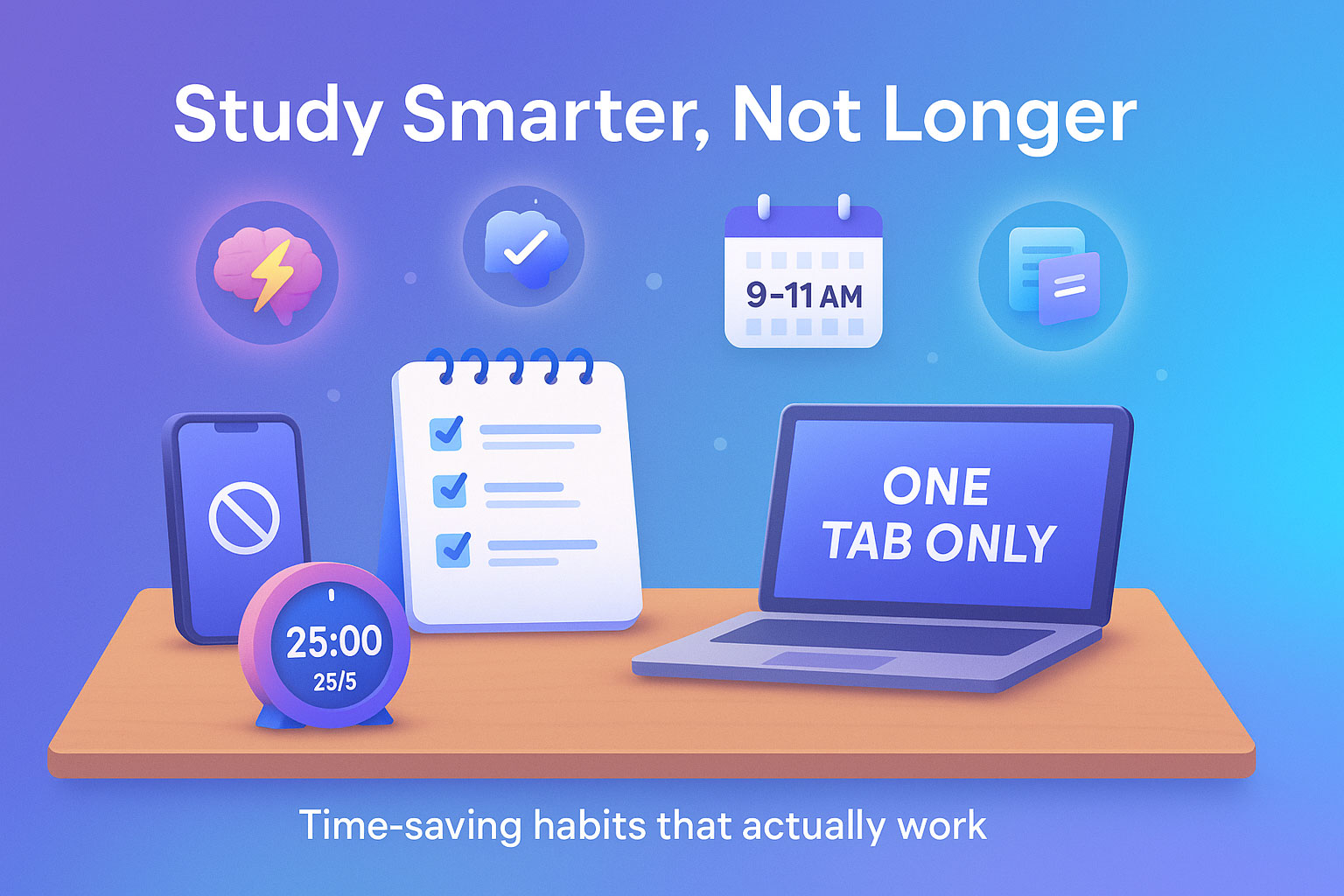
Your brain isn’t built to hold focus endlessly. It works best in short bursts, then needs to reset. That’s why techniques like the Pomodoro method (25 minutes on, 5 minutes off) work so well. According to Cuesta research, short focused sessions improve long-term retention and reduce burnout.
Top Time-Saving Study Habits
Prioritize Tasks with a To-Do List
Ever sit down and think, “Where do I even start?” That was me , until I started listing out everything I needed to do, then ranking them. I use a modified version of the Eisenhower Matrix , urgent vs important. What’s due soon? What’s difficult? I tackle those first when I’m fresh.
Want to get even more strategic with your study load? Try these tips on how to prioritize your to-do list. It’s especially helpful when you’re juggling multiple classes or projects.
Here’s how I break it down:
| Urgent | Not Urgent |
|---|---|
| Tomorrow’s test review | Next week’s group project outline |
| Email professor by noon | Organize notes for finals |
Suddenly, the fog lifts. You know where to begin, and that clarity alone saves you a chunk of wasted time.
Break Projects into Smaller Tasks
Writing a paper used to sit on my list like a dark cloud. But when I broke it into parts , outline, intro paragraph, main argument , it felt manageable. Each step took 15-30 minutes instead of the 3 hours I used to dread.
By the way, this trick works wonders for exam prep too. I now prep for exams in “topic clusters” (e.g. chapters 1–3, then 4–6). No more all-nighters with 200 pages staring me down.
This same habit works wonders when used in tandem with planning for long-term assignments. You can manage multi-week projects with less stress and more structure.
Use Focused Study Sessions with Breaks
I resisted breaks for years, thinking they were lazy. But when I started studying in 50-minute sprints with 10-minute breaks, my brain thanked me. I could absorb more in 50 minutes than I used to in 2 hours.
If you’re interested in the framework behind this approach, the Pomodoro Technique for Students is a great place to start. It’s designed for focused bursts and perfect for study sprints.
Study at Your Peak Times
This one took me a while to learn: when you study matters more than how long. I’m sharpest from 9 to 11 AM and again around 5 PM. After 8 PM? I’m toast.
I used to force myself to study at night ‘cause it felt like the only time. But once I rearranged things to protect those 9–11 slots, I was finishing work faster and remembering more.
Not a morning person? That’s fine. Track your energy for a week. Then build your sessions around your “brain’s golden hour.”
Avoid Multitasking
This one’s tough. Phones, tabs, music, messages , all calling your name. But multitasking literally scrambles your concentration. I tested it. I read the same page while texting back and forth with a friend… then again in silence. My recall dropped by half during the texting session. Half.
Organize Your Study Environment
Tidy Up Your Desk
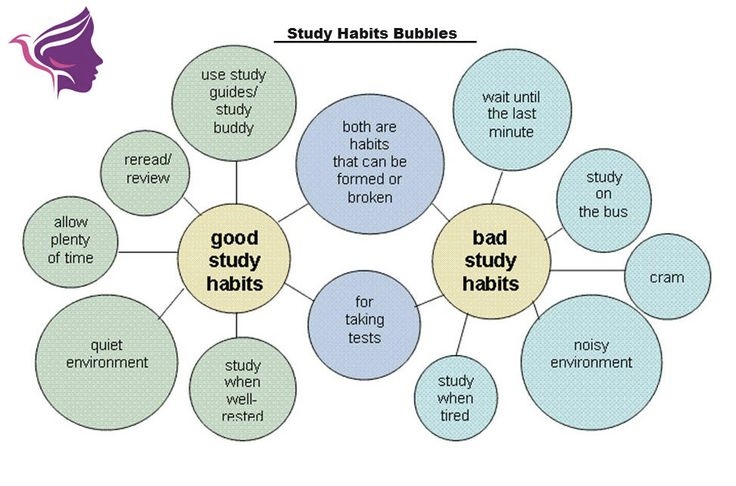
I can’t focus when things are messy. Back in high school, I spent half my study time looking for stuff , notebooks, highlighters, that one page from class. Now, everything has a place. Pens in a cup. Sticky notes on a board. Textbooks on a shelf.
I even keep a “grab basket” for essentials: timer, charger, blue-light glasses. It’s silly, but it saves me minutes every time.
Eliminate Distractions
Clutter isn’t just physical , it’s digital too. I use the Forest app to block apps during study time. When I leave my phone in another room and wear headphones? That’s my sweet spot. No noise, no side convos, just focus.

Use Tools That Help Save Time
Tech can be your worst enemy or your secret weapon. I lean hard into the second. I started using Notion to organize readings and class notes by subject, week, and priority. No more flipping through three notebooks to find what I need.
I also use Quizlet for flashcards, and Google Calendar to block study sessions like appointments. Set it, forget it. Show up. Done.
Still hunting for the right apps? Here’s a curated list of digital tools for studying that actually make learning smoother and faster.
Review Techniques That Save Time
Summarize in Your Own Words
I used to copy notes word for word. Big mistake. When I started putting things in my own words , messy, imperfect, mine , I remembered way more. Turns out, it’s called active recall. Forces your brain to work harder, so it sticks better.
I’d read a section, close the book, then explain it out loud to nobody (or my dog). If I stumbled, I’d go back and try again. Way faster than rereading.
Use Visual Aids and Flashcards
I’m a visual thinker. Charts, color-coding, flow diagrams , all of it helps me make sense of tough stuff. So I use diagrams for big-picture views and flashcards for quick memory checks. Especially for vocab or formulas. Makes review less painful.
Apps like Anki help with spaced repetition , you see tough cards more often until they stick. Took some setup, but paid off huge during finals.
Practice Teaching What You Learn
If you can teach it, you know it. I didn’t believe this until I tried it with a friend. We’d alternate explaining topics to each other like we were the professor. I’d realize instantly what I didn’t fully get.
This trick , known as the Feynman Technique , helped me ace subjects I’d been barely passing before. Try it with a classmate or even record yourself talking it out.
Build a Consistent Study Routine
Batch Similar Subjects or Tasks
Switching subjects too often drains mental energy. I learned that grouping similar topics (like reading-heavy tasks together, or problem-solving sessions) helps me stay in the zone. Monday mornings? I do all writing. Tuesday evenings? Problem sets.
By batching tasks, I don’t have to constantly shift gears. My brain stays in rhythm and I get more done with less fatigue.
Track Progress and Adjust Weekly
Each Sunday, I open my planner, glance back, and ask: what worked last week? What didn’t? Did I hit my targets? If not, why? I jot quick notes and make small changes , maybe I need more review time for one subject or less time on another.
Tracking lets me fine-tune my flow. Even 10% better each week adds up fast over a semester.
FAQ
What is the best time of day to study?
There’s no one-size-fits-all answer. Some people focus best in the morning when energy is fresh. Others are night owls. Track your focus for a week, then plan study sessions during your “peak hours.”
How do I stop procrastinating while studying?
Start small. Commit to just five minutes. Often, getting started is the hardest part. Also, create a distraction-free space, use timers like Pomodoro, and write out your task list the night before. Clarity cuts procrastination.
How long should a study session be?
The sweet spot for most people is 45 to 60 minutes, followed by a 5- to 10-minute break. That keeps your brain fresh and alert. Avoid marathon cramming sessions , they tire you out without better results.
What are the best tools to help me study faster?
Notion and Evernote for organizing. Quizlet and Anki for flashcards. Forest for staying off your phone. Google Calendar to block out time. Even simple pen and paper with color coding can work wonders.
Recap of Key Points
If you want to study smarter, not longer, here’s what worked for me:
- Write down and rank your tasks , clarity saves time.
- Break everything into small, doable steps.
- Use focused work sessions and reward yourself with breaks.
- Know your energy cycles and schedule around them.
- Ditch the distractions. Seriously, one tab at a time.
- Make your space and tools work for you.
- Teach, test, and track your way to retention.
Final Takeaway
You don’t need more hours. You need better habits. That’s it. Once I let go of cramming, clutter, and chaos, I actually enjoyed studying , and it showed in my grades. If I could go back and whisper one thing to my 18-year-old self, it would be this: small changes add up. You don’t need to overhaul everything. Just tweak. Test. Tweak again.
Studying doesn’t have to feel like punishment. When you respect your time and listen to your brain, it becomes… smoother. Even kind of fun. Start with one habit this week. Track how it feels. Then stack another next week. Before long, you’ll wonder how you ever studied any other way.