
How Sleep Affects Time Management and Productivity

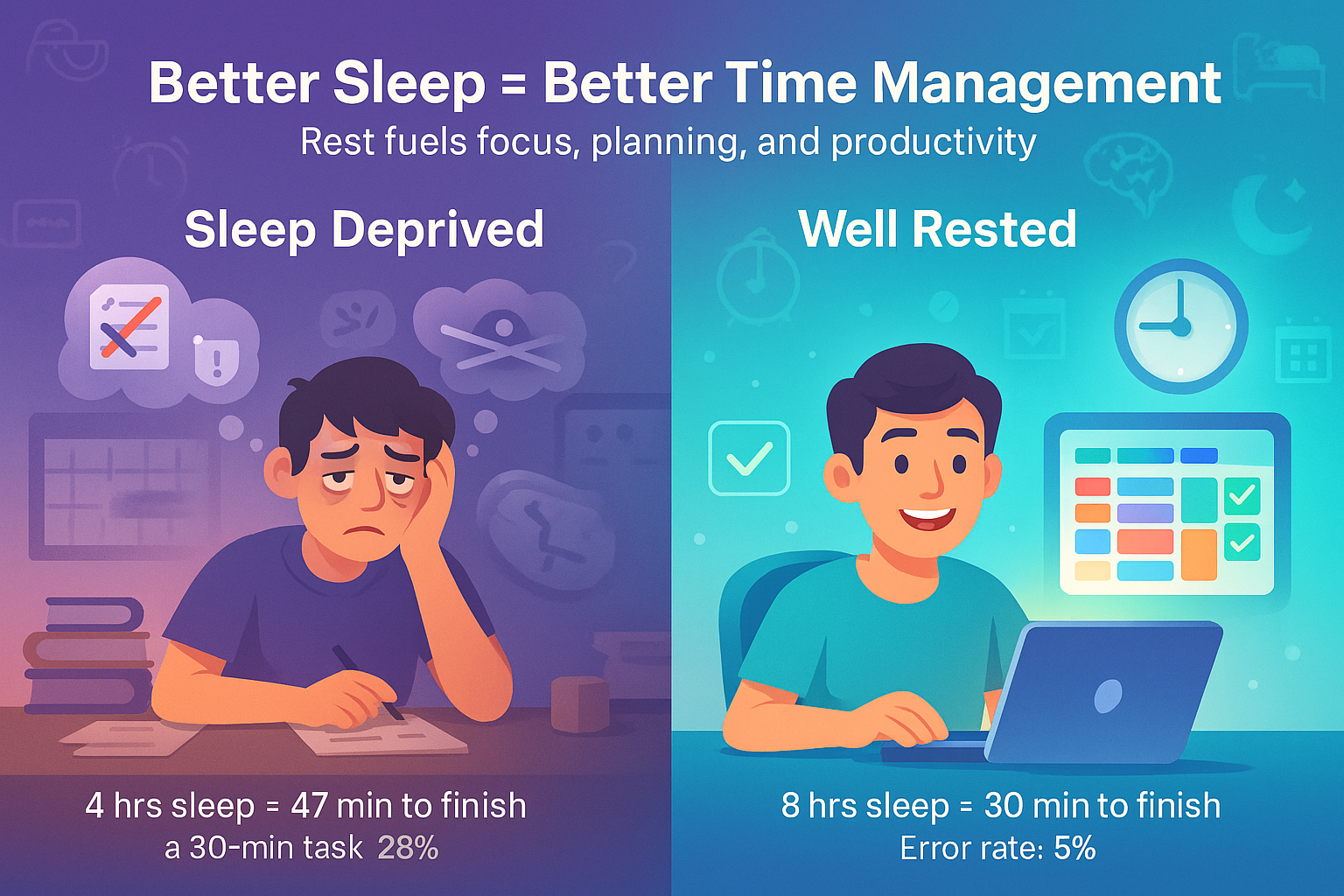
I used to think time management was just about apps and planners. But turns out, the real thief of my time wasn’t poor scheduling it was poor sleep.
The problem is sneaky. You pull a late night, thinking you’re being productive. But the next day? You’re slower. Less focused. Tasks drag on. Then you go to bed stressed about everything you didn’t finish, and the cycle repeats.
Here’s what finally broke the loop for me: learning the actual science behind sleep and how it hijacks the way we think, act, and plan. Once I saw how lack of rest was scrambling my brain’s ability to stay on track, everything changed.
You’ll learn:
- How your brain’s time-perception breaks down without sleep
- Why poor sleep actually triples the time it takes to manage your schedule
- What happens in your brain when you’re sleep-deprived vs. well-rested
- The simple bedtime fix that changed my entire workday
If you’re stuck in a loop of staying up late to finish work, then losing the next day to brain fog, this page is for you. You won’t just learn the facts you’ll learn how to apply them, practically, without adding more to your plate.
The Science Linking Sleep and Cognitive Function
I’ll be blunt: sleep isn’t optional. It’s the reset switch for everything from memory to focus to decision-making. And it’s all tied to one part of the brain you’ve probably heard of: the prefrontal cortex. This is your “executive control tower” and when you’re sleep-deprived, it’s basically running on fumes.
Ever stayed up late then forgot where you saved a file the next day? That’s not forgetfulness. That’s your brain’s sleep-starved wiring failing you. Sleep supports something called executive function your ability to plan, prioritize, and self-regulate. Without it, even the smallest tasks become foggy.
If you want to strengthen those skills, pairing good sleep with proven time management strategies for students creates a massive boost in focus and productivity.

Sleep and Attention Span
When I don’t sleep enough, I can’t even finish a sentence without getting distracted. That’s not just a “me” thing it’s neurological. Poor sleep reduces attentional capacity. That means longer time to complete simple tasks and more frequent breaks, even if you don’t notice them.
One study showed that employees with insomnia spent nearly three times more time on time management activities than their well-rested peers but still felt less productive. They weren’t lazy. They just didn’t have the brain fuel to stay focused.
If you’ve noticed this happening during your study sessions, methods like the Pomodoro technique can help break tasks into smaller bursts especially when you’re working on rebuilding healthy sleep habits.
Sleep and Executive Function
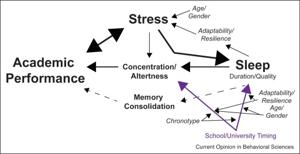
Executive function is basically the part of you that makes grown-up decisions. Think: “Do this now, save that for later.” But sleep deprivation messes with that. Without enough REM and deep sleep, your brain struggles to sequence steps, weigh consequences, and avoid distractions. That’s why “just answering an email” turns into two hours of scattered to-do lists.
The Time Management Cost of Sleep Deprivation
This one hits hard. I used to think sleeping less gave me more time. But what I got was more mistakes, more rework, and more forgotten tasks. Basically, poor sleep made me feel busy but achieve nothing. Here’s why. That’s why pairing sleep improvement with tools like daily planning templates can help create realistic schedules you can actually follow.
Quantifying Time Lost
People who sleep less than 6 hours a night consistently underestimate how long tasks will take. That’s called time blindness. They’re not just tired they literally misjudge time. A cognitive trap. Even worse, their task-switching cost goes up. So multitasking becomes a nightmare.
| Hours of Sleep | Avg. Time to Complete a 30-min Task | Error Rate |
|---|---|---|
| 4 hours | 47 minutes | 28% |
| 6 hours | 38 minutes | 17% |
| 8 hours | 30 minutes | 5% |
Source: Adapted from performance benchmarks in Philips Sleep Research
Workplace and Academic Impacts
I’ve coached students who insisted they just needed better planners. But the real issue was they were averaging 5 hours of sleep and couldn’t focus in class. One even told me, “I wake up late, rush all day, and go to sleep stressed, then start over.” Sound familiar?
Employees and students with low sleep report lower time awareness, take longer to finish reports or assignments, and are more prone to redoing work due to forgetfulness or lack of clarity. Sleep deprivation leads to poor prioritization. You might stay “busy,” but it’s often on the wrong things.
The Feedback Loop: Poor Time Management Affects Sleep
This is where it gets frustrating. The worse you are at managing your day, the more stressed you feel at night. That stress? It wrecks your sleep. Which then makes time management even harder. It’s a loop and I’ve been stuck in it for months at a time.
Using calendar apps for academic planning helped her finish work before bed and sleep more soundly.
Evening Stress and Sleep Quality
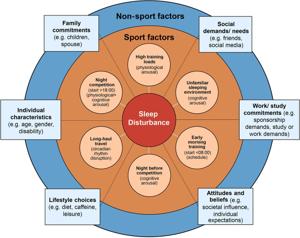
When I go to bed with a spinning to-do list, I can’t fall asleep. Or I wake up at 3 a.m. thinking about emails. Research links time stress to insomnia symptoms especially among students and knowledge workers.
You spend your day firefighting, and at night, your brain’s still in “emergency mode.” This kind of mental unrest tanks sleep efficiency, meaning you spend more time in bed but get less actual rest.
Student Experience with Scheduling
I once had a 19-year-old client tracking her week with a color-coded calendar. After a few tweaks, she realized most of her “homework time” happened after 11 p.m. not by choice, but by poor planning. Once she moved things to earlier blocks and stopped checking TikTok during transitions, she fell asleep 90 minutes earlier and got more done.
She’s not alone. Studies show that students with poor organizational skills report lower quality sleep due to the anxiety that builds when tasks pile up and time seems to disappear.
Improving Both: Actionable Strategies
I used to treat sleep like a luxury. But when I started treating it like a non-negotiable meeting with my future self? Game-changer. If you’re constantly overwhelmed, it might not be your to-do list it’s your recovery time that’s missing.
The good news? You don’t need to overhaul your life. Just anchor a few habits that support both time and rest.
You can also improve your results by combining smart rest habits with prioritization techniques so you’re working on the right things at the right time without burning the midnight oil.
Sleep Hygiene Practices That Help You Focus
This term gets thrown around a lot, but let’s be real: most people ignore it. Sleep hygiene is just the stuff you do before bed that tells your brain, “Hey, time to power down.” For me, that meant cutting screen time 30 minutes before bed, using a sunrise alarm clock, and keeping the bedroom cool and quiet.
Experts like Dr. Michael Breus recommend staying consistent with your bedtime and wake time even on weekends. That predictability helps align your circadian rhythm, which affects energy, alertness, and decision-making throughout the day.
Scheduling Sleep as a Priority
If you’re like me, you schedule everything except rest. You need to flip that. Block your sleep hours first. Then, build your day around that. I started treating my sleep like a client meeting I couldn’t cancel. That subtle mindset shift helped me protect my evenings from tasks that could wait.
Pro tip: Don’t just block bedtime. Set a recurring “wind-down” event an hour before. That’s your time to unplug, not start “just one more thing.”
Batching Tasks Around Sleep Energy Peaks
Here’s a weird trick that worked for me. I paid attention to when I felt most alert usually late morning and started saving deep work for then. Lighter stuff, like emails or errands, I scheduled post-lunch when I dipped. That alignment made my work more efficient, and I finished earlier. More time, more sleep.
This rhythm is different for everyone. But once you know when your brain’s firing best, match it with high-focus tasks. You’ll finish faster and stay ahead of your time crunch.
Tools That Sync Your Time and Rest
Technology doesn’t have to ruin your sleep it can actually help, if you use it right. I’ve tried a bunch of sleep trackers, but my favorite combo is using a smart alarm (like Sleep Cycle) paired with Google Calendar alerts that nudge me to start winding down. It’s like having a tiny assistant who cares about my future focus.
Try these:
- Sleep Cycle: Tracks your sleep stages and wakes you up gently during light sleep.
- Forest App: Encourages focus sessions tied to real-world tree planting. Sleep + sustainability? Love it.
- Google Calendar: Set recurring events for bedtime, wind-down rituals, and review time for tomorrow’s priorities.
FAQ
How does sleep deprivation affect task switching?
It increases what’s called “switch cost” the mental time lag between ending one task and starting another. That lag grows when you’re tired, making multitasking even harder and more draining.
Can a short nap fix poor time management?
Sometimes. A 20-minute power nap can restore alertness, but it’s not a long-term fix. It won’t repair chronic fatigue or the attention loss from poor nighttime sleep.
What’s the ideal amount of sleep for productivity?
For most adults, it’s 7–9 hours. Less than 6 hours repeatedly leads to cognitive decline and worse time judgment. It’s not about just getting enough it’s about getting consistent, quality rest.
Recap of Key Points
Sleep isn’t just rest it’s the secret weapon behind smart time management. Your brain needs downtime to focus, remember, and plan. Miss out, and you’ll spend more time doing less. Whether you’re a student, remote worker, or anyone juggling a million things, better rest means better use of your time.
I’ve lived both sides of the sleep/productivity loop. When I ignored sleep, I was always behind. When I respected it, I started getting ahead. You don’t need another app or planner you need to protect your sleep like your schedule depends on it. Because it does.
Want more time? Sleep on it. Literally.