
How to Set SMART Goals for Academic Success


I never used to set goals. I’d just tell myself, “do better next semester,” and then… nothing really changed. Sound familiar? I didn’t realize it at the time, but vague hopes aren’t plans. And plans, real ones, need structure. That’s where SMART goals flipped the script for me. They helped me go from surviving school to actually owning it.
Maybe you’re struggling with motivation, or just don’t know how to organize your progress. Maybe you’re tired of setting goals that don’t stick. I’ve been there.
What finally helped? SMART goals. A five-part framework that helps you create clear, trackable, realistic goals that actually lead to progress,academic or otherwise.
In this guide, I’ll show you how to use SMART goals to stop the cycle of vague promises and start making academic moves that stick. You’ll learn:
- What SMART stands for (with examples that aren’t snoozy)
- How goal-setting affects academic performance (like, actually proven stuff)
- Examples by subject and school level
- What to do when you slip,and how to reset
This isn’t just about goals. It’s about feeling proud of your progress. Ready to stop spinning your wheels?
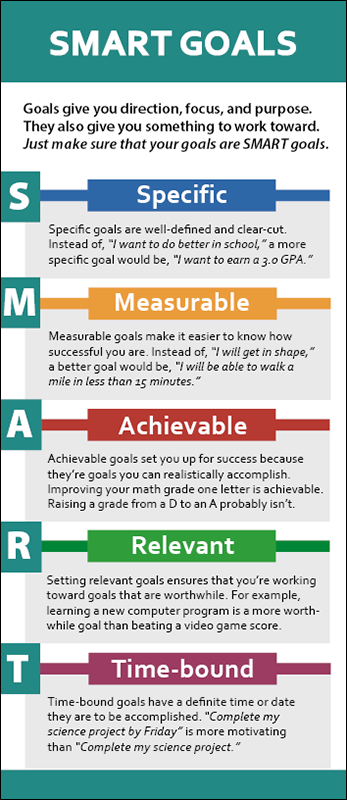
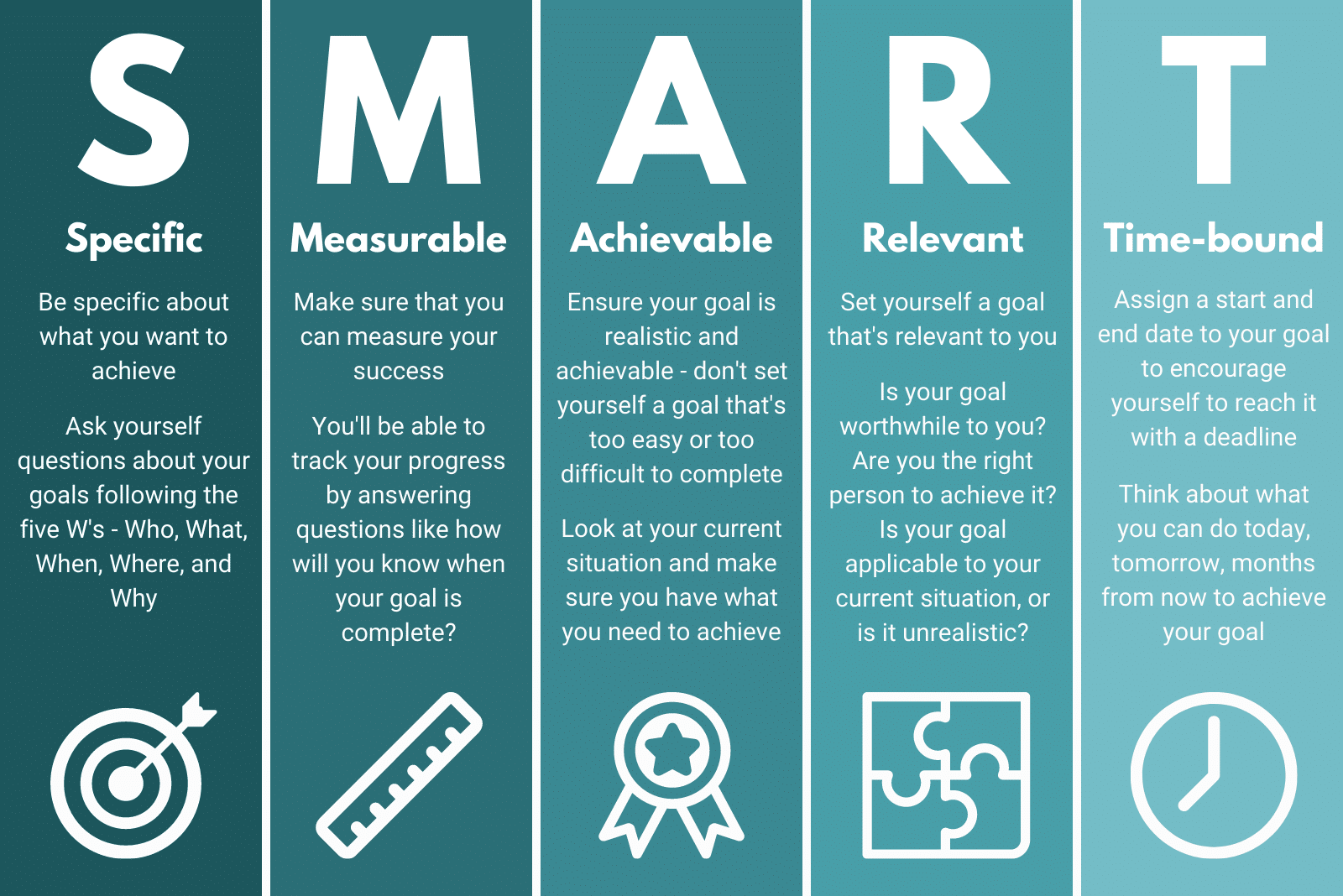
What Are SMART Goals?
Alright, so SMART is an acronym, and yeah, you’ve probably seen posters about it in classrooms or counselor offices. But don’t let that fool you,this method works if you actually use it right.
Here’s what SMART means, and why it matters:
Specific
No more fuzzy goals like “I wanna do better.” That means nothing. A specific goal sounds more like: I want to raise my chemistry grade from a 70 to an 85.
Measurable
You need a way to track progress. Otherwise, how do you know you’re getting anywhere? Say: I’ll complete all chemistry assignments with 90% accuracy.
Achievable
Dream big, but be real. If you’ve been failing calculus all year, jumping to an A+ overnight probably won’t happen. But boosting your grade a full letter over two months? Yep. That’s within reach.
Relevant
Does this goal even matter to you? If you’re majoring in engineering, prioritizing math makes sense. If you hate reading but wanna ace literature for your GPA, that’s fair too,just know why it matters to you.
Time-bound
Give yourself a deadline. Not “someday.” Try: By the end of the semester, I’ll bring my chem grade up to a B.
Pairing goals with good scheduling is even more powerful. Learn how to align goal-setting with planning by visiting Time Management for Students.
The Importance of Goal Setting in Education
Here’s something wild: studies show that students who set specific goals tend to outperform those who don’t. In fact, one Peak Performance Center study found goal-setters stayed more focused, were more motivated, and felt less stressed. Why? Because they had a roadmap. Not just wishful thinking.
I used to aimlessly study for finals until 1AM. Now I plan weekly benchmarks,like reviewing one chapter every Tuesday and practicing sample problems Thursday. Feels so much better than panic-cramming. And guess what? My grades jumped, but so did my confidence.
If you’re looking to level up your day-to-day academic focus, check out how to create a weekly study schedule that actually sticks.
Why vague goals fail
“Do better in math” is not a goal. It’s a hope. Hope’s great, but it won’t raise your GPA. What actually works? Targeting exactly what needs improvement and tracking it.
SMART goals boost motivation
Each time you check off part of a SMART goal, your brain goes: “Hey, that felt good.” It snowballs. That’s called building momentum,and it’s everything in school.
They keep you grounded
When things get chaotic,projects, tests, life,you don’t have to scramble. You’ve got your next step already laid out. That structure = peace of mind.
Comparing SMART and Non-SMART Goals
If you’re still wondering what makes SMART goals actually different, here’s a quick comparison from my own experience. Let’s keep it real:
| Vague Goal | SMART Version |
|---|---|
| I want to study more | I’ll study biology for 30 minutes every weekday at 7PM for the next month |
| Get better at writing | I’ll write one 500-word essay every week and review it with my tutor each Friday |
| Be more organized | I’ll use a digital planner to schedule all homework deadlines weekly for the rest of the semester |
See the pattern? The second ones tell you exactly what to do, how to measure it, and when it should happen. That’s how you move from “maybe” to “done.”
Want more structure to go along with those goals? Try integrating daily planning templates into your weekly reviews.
How to Apply SMART Goals to Academic Life
Now let’s talk about how you can actually use this framework in real life,not just on paper. Whether you’re trying to pass a class, prep for finals, or stop procrastinating every night, SMART goals can be built around anything.
Here’s what’s worked for me and my study buddies:
Start with the problem
Before setting any goal, ask: “What exactly do I need to fix?” That could be low test scores, missed assignments, poor focus,name it.
Then write ONE goal using SMART
Don’t try to overhaul your entire semester overnight. Pick one subject. One habit. One shift. Like this: I will submit all assignments in English class on time for the next 4 weeks using a checklist system.
Use tools to stay consistent
I’m a sucker for analog planners (stickers, color-coding, the works). But if that’s not you, apps like Trello or Notion work great for tracking SMART goals. I even made a simple table in Google Sheets to log quiz scores,watching the numbers rise felt awesome.
Examples of Academic-Specific SMART Goals
It’s easier to write your own when you see how others frame theirs. Below are examples from students I’ve worked with during study groups and tutoring sessions:
- I’ll raise my algebra grade from a 68 to a 78 by completing all homework and reviewing with my tutor twice a week for the next 5 weeks.
- I’ll finish reading “To Kill a Mockingbird” by reading two chapters every weekday after dinner, completing the book in 3 weeks.
- I’ll improve my class participation in history by contributing at least once per class and keeping a log of each contribution.
Notice how these aren’t just dreams,they’re action plans.
SMART Goal Examples for Different Subjects
Not all goals are created equal. What works in math might not apply in language arts. Here’s how to tailor SMART goals by subject, based on actual use cases from students I know:
Math and Science
These are skill-based, so measurable progress is easier to track. You might try:
- I will complete 5 extra practice problems each night from now until finals to improve problem-solving speed.
- Attend all after-school chemistry labs this semester and earn at least 80% on each lab report.
Reading and Writing
This is where people struggle because the progress isn’t always numbers. Here’s what helps:
- Write two journal entries a week for the next 6 weeks to improve fluency and writing confidence.
- Use a reading tracker to complete one novel each month by reading 20 pages a night.
Behavioral or Time Management
Sometimes it’s not about grades,it’s about habits. Goals like:
- Arrive to school 10 minutes early every day this month to eliminate tardies.
- Plan out weekly assignments every Sunday night for the rest of the quarter using a paper planner.
SMART Goals for Different Academic Levels
One size doesn’t fit all. The goals you set in 5th grade aren’t the same as what works in college. Here’s how it breaks down:
Elementary and Middle School
These goals usually need more support from teachers or parents. Like:
- I’ll practice multiplication flashcards for 10 minutes every school night for 3 weeks.
- I’ll return my homework folder signed every day this month.
High School
This is where academic goals meet life planning. Think ACT prep, GPA, or career paths.
- Complete one ACT practice section each week and review answers every Saturday morning until the test date.
- Raise my GPA from 2.5 to 3.0 by earning a B or higher in at least 4 out of 6 classes this semester.
A solid approach might include planning for long-term assignments with SMART frameworks in mind.
College-Level
Now it’s about long-term goals and balancing multiple courses or internships.
- Finish reading assignments 2 days before due dates for the rest of the semester to allow time for discussions.
- Attend all office hours for econ class this term to raise my exam score average from 70% to 85%.
Tips for Sticking to Your SMART Goals
Writing your goal is just step one. Now you’ve gotta live it. Here’s what’s helped me and my classmates stay on track:
Track Progress with a Simple System
I started using a color-coded calendar,green for completed tasks, red for missed ones. Some friends use habit trackers in bullet journals. Others log grades weekly in Google Sheets. Find what feels satisfying to you.
Accountability is Gold
I had a friend who’d check in every Sunday night to see if I met my reading goal. That small nudge? Game changer. Share your goals with someone you trust,even your teacher.
Be Flexible, Not Fragile
If you fall off, don’t beat yourself up. Rework your goal. Life changes, and so can your plans. Just don’t quit cold.
What to Do When You Miss a Goal
Here’s the honest truth,sometimes you won’t hit it. I’ve had weeks where nothing got done. But here’s how I bounced back:
Figure Out What Went Wrong
Was the goal too big? Did you forget? Were you just overwhelmed? Answering that helps you fix the root, not just the symptom.
Refine and Reset
I once changed a daily reading goal to every other day. Made it less stressful,and I still got through the book. Shrink the goal, shift the deadline, or reword it completely.
Use Misses as Feedback
A missed goal isn’t failure. It’s data. Use it to adjust your strategy.
Sometimes, you’ll need help when life throws curveballs. That’s when learning to handle unplanned disruptions becomes essential.
FAQ
What are SMART goals in education?
SMART goals are structured goals that are Specific, Measurable, Achievable, Relevant, and Time-bound. They help students focus and stay organized, which boosts performance.
How do I create a SMART goal for studying?
Start with your study challenge. Say you’re always cramming. You might write: I’ll review my history notes for 20 minutes every night at 8PM for the next 3 weeks. Boom. SMART.
Can SMART goals really help me get better grades?
Yes. I went from Cs to As by planning weekly goals that tracked real progress. And studies back this up,goal-setting boosts retention and motivation. It’s science-backed, not fluff.
How many SMART goals should a student have?
Start with one or two. More than that gets overwhelming. Focus on what will have the biggest impact,then build from there once the habit sticks.
Recap of Key Points
SMART goals aren’t just trendy words,they’re tools. You’ve seen how specific goals with clear deadlines turn stress into progress. Whether you’re prepping for finals or trying to finally turn in homework on time, this structure works.
Final Takeaway
You don’t have to be naturally disciplined or organized. SMART goals make those traits something you can learn. And once you do, school starts to feel a whole lot easier.
Closing Thought
When you write goals that serve you,not your teacher, not your parents, you,you start building momentum. One win leads to another. And suddenly, you’re not just passing,you’re proud.